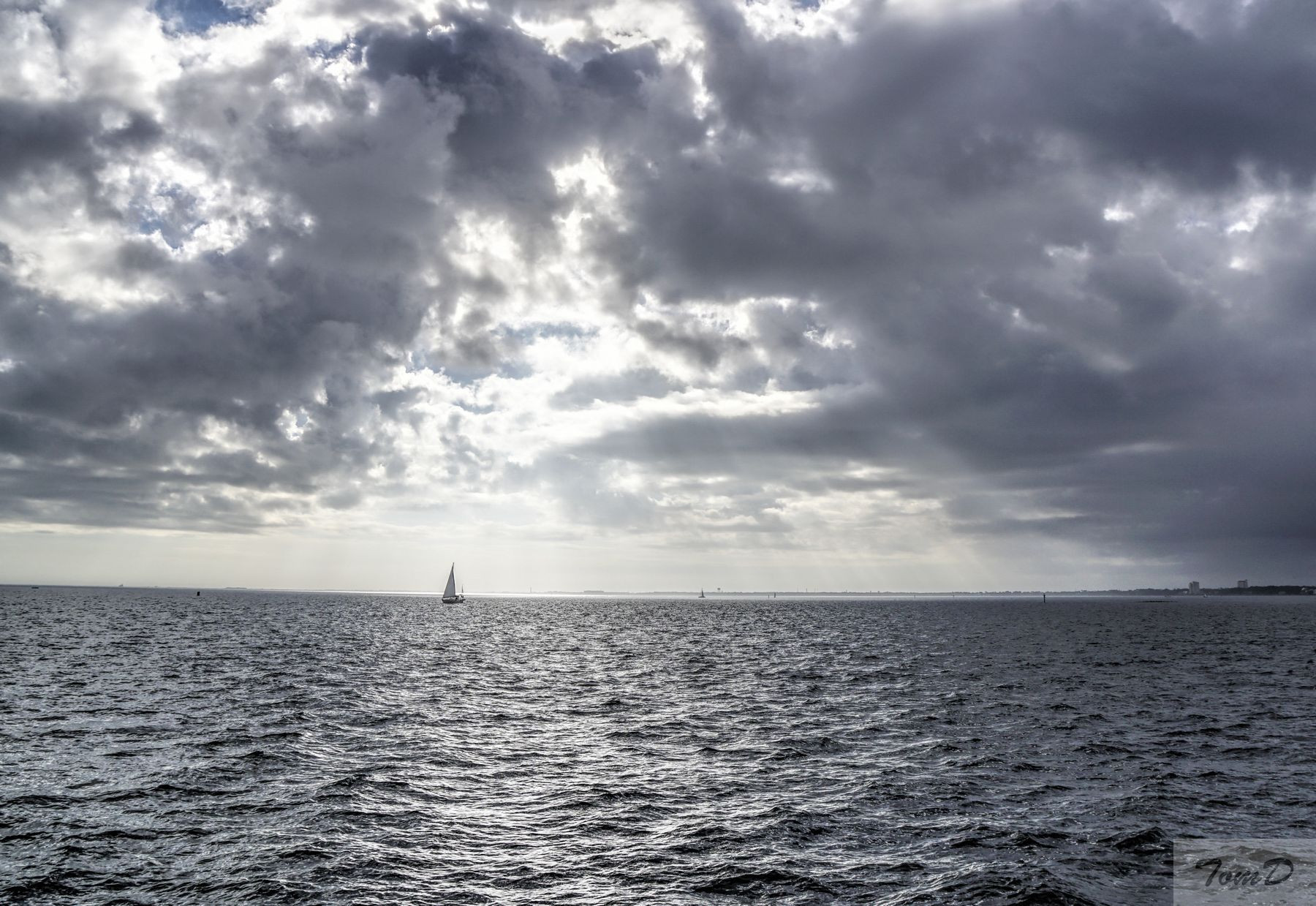
I’ll add one of Pensacola Bay.
That’s NAS (Naval Air Station) Pensacola pretty much all the way on the right, and in the distance, the inlet leading to the Gulf of Mexico.
All the Secrets of the Universe and Some Really Important Stuff Too!
I’ll add one of Pensacola Bay.
That’s NAS (Naval Air Station) Pensacola pretty much all the way on the right, and in the distance, the inlet leading to the Gulf of Mexico.
Update:
I kicked this to the top of the site because I want it to get more views. Tom has collected some wonderful photos of an iconic old military facility. I especially like the shots of the interior masonry. His use of HDR (high dynamic range) technique produces fascinating images.
Ft Pickens is the site of a US National Park located at the mouth of Pensacola Bay into the Gulf of Mexico. Historically it has been the site of military defences to protect said bay from foreign intervention. Other than altercations between Union and Confederate forces during the Civil War, I’m not aware of any military confrontations between US and hostile foreign forces since the original fort was established in 1830. At least in one instance, WWII, I’m fairly sure that was because of the deterrence of the fort. Especially in the 1st couple of years of WWII, the Gulf was lousy with German submarines, and absent the fort there would have been little to deter the Germans from coming into the bay and shelling the deep water port facilities.
Fort Pickens was active as a military base from 1830 to its closing in 1947 and it has abandoned facilities and gun emplacements from all along that time frame. This is just a few pictures and doesn’t begin to encompass the buildings, emplacements and facilities there.
Photos:
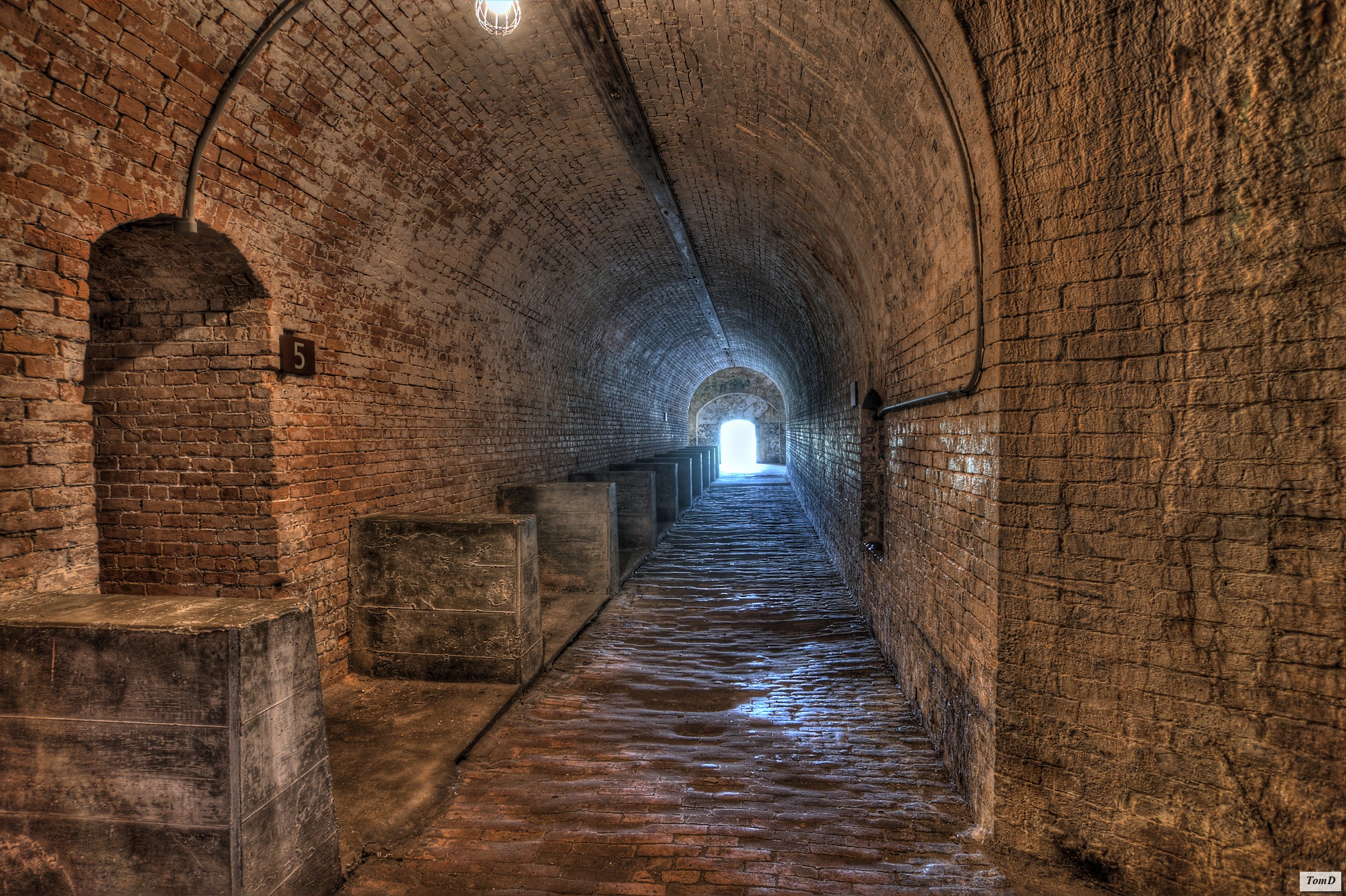
Light at the End of the Tunnel: This is one portion of one wing from the 1st facilities constructed, in 1830, completed just 8 years after Florida was ceded to the US by Spain. It was constructed of brick using slave labor.

This is a spotting tower used to spot and correct the shell fire from the two 6” shield guns featured in later picts.
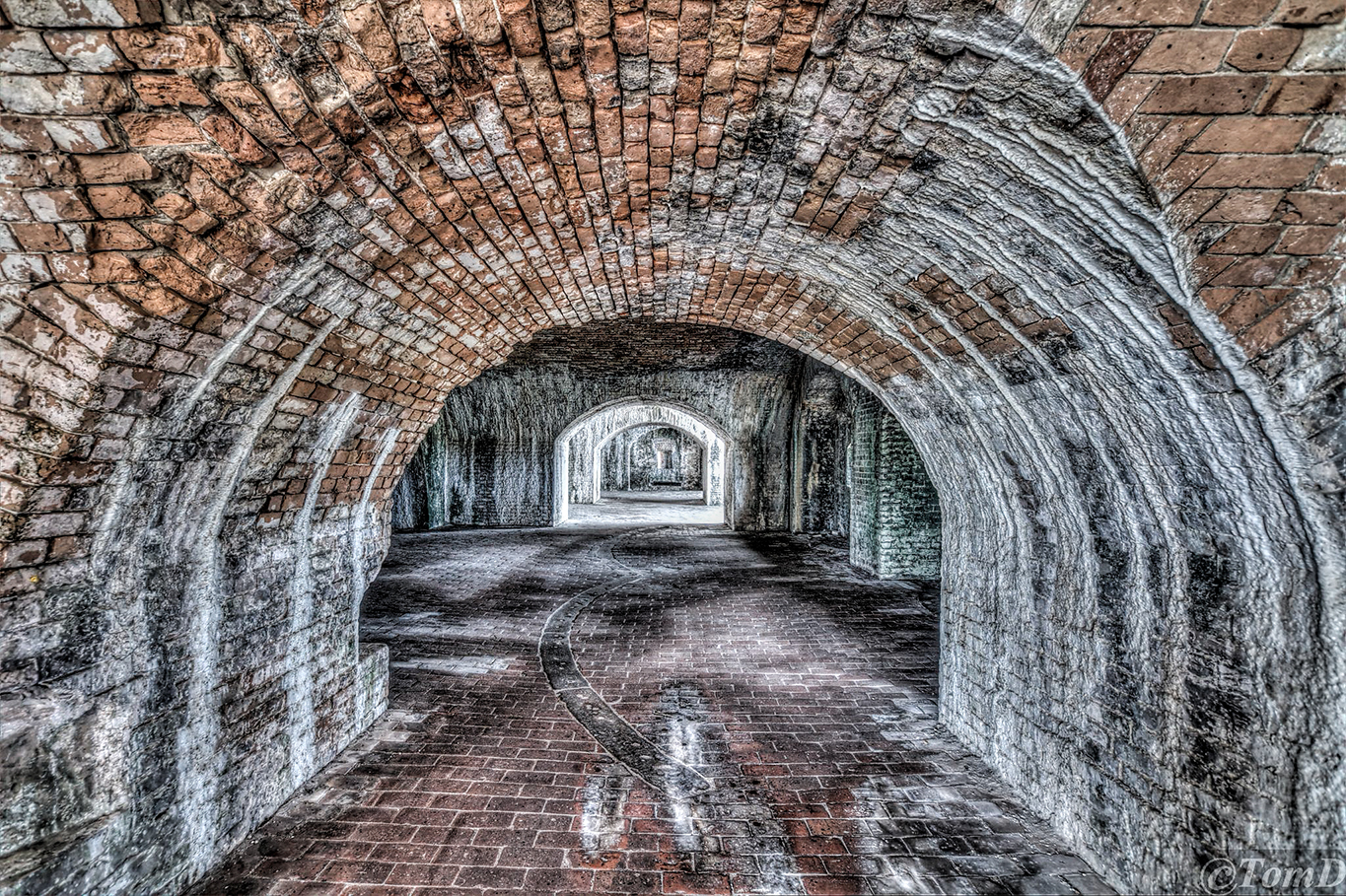
Another location in another wing of the 1830 fortress.
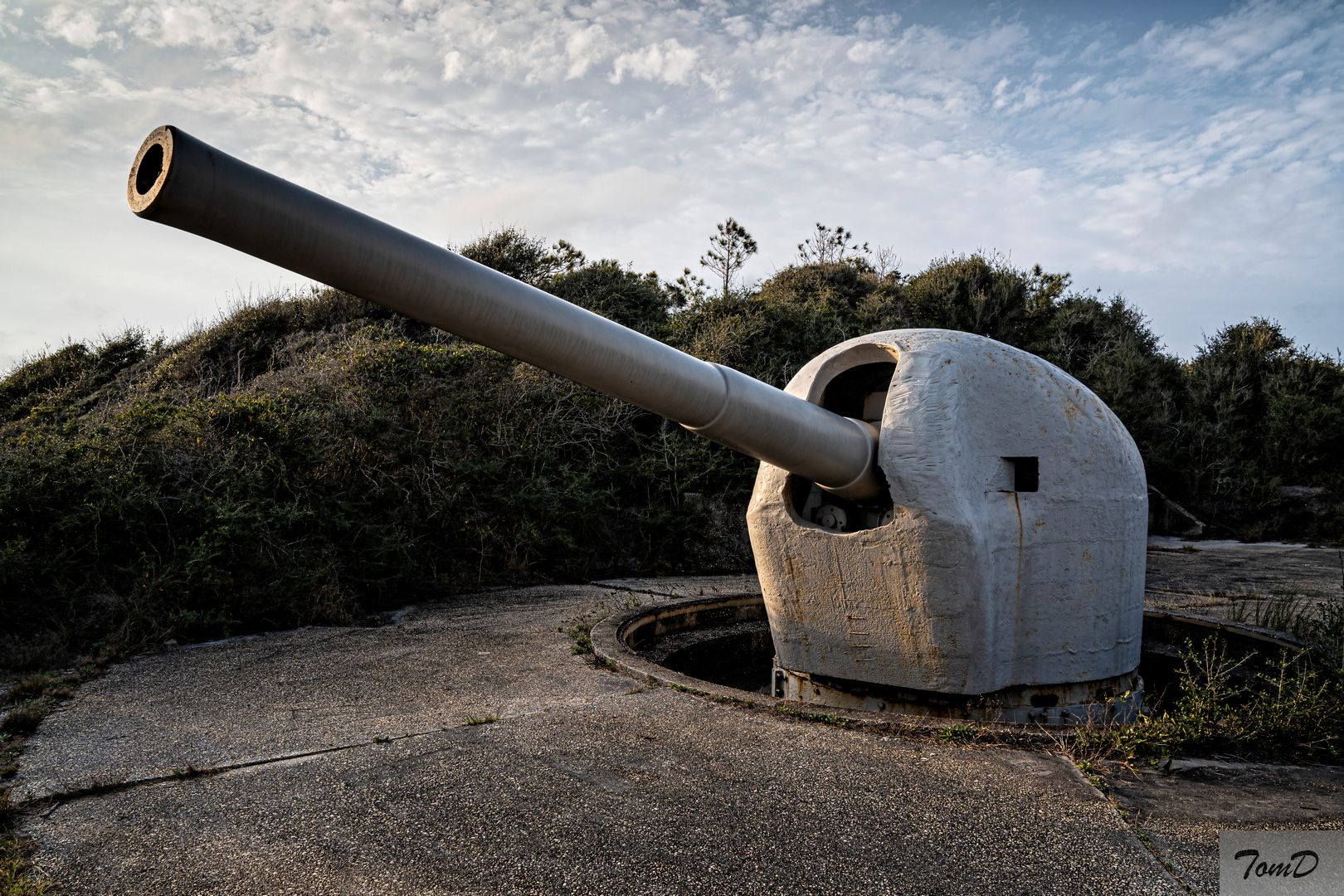
One of the 6”. These guns were 6” shield guns in use from before to through WWII. These guns threw a shell weighing probably around 90 pounds to a distance of around 17,000 yards. There’s a picture of the interior of the shield further down.
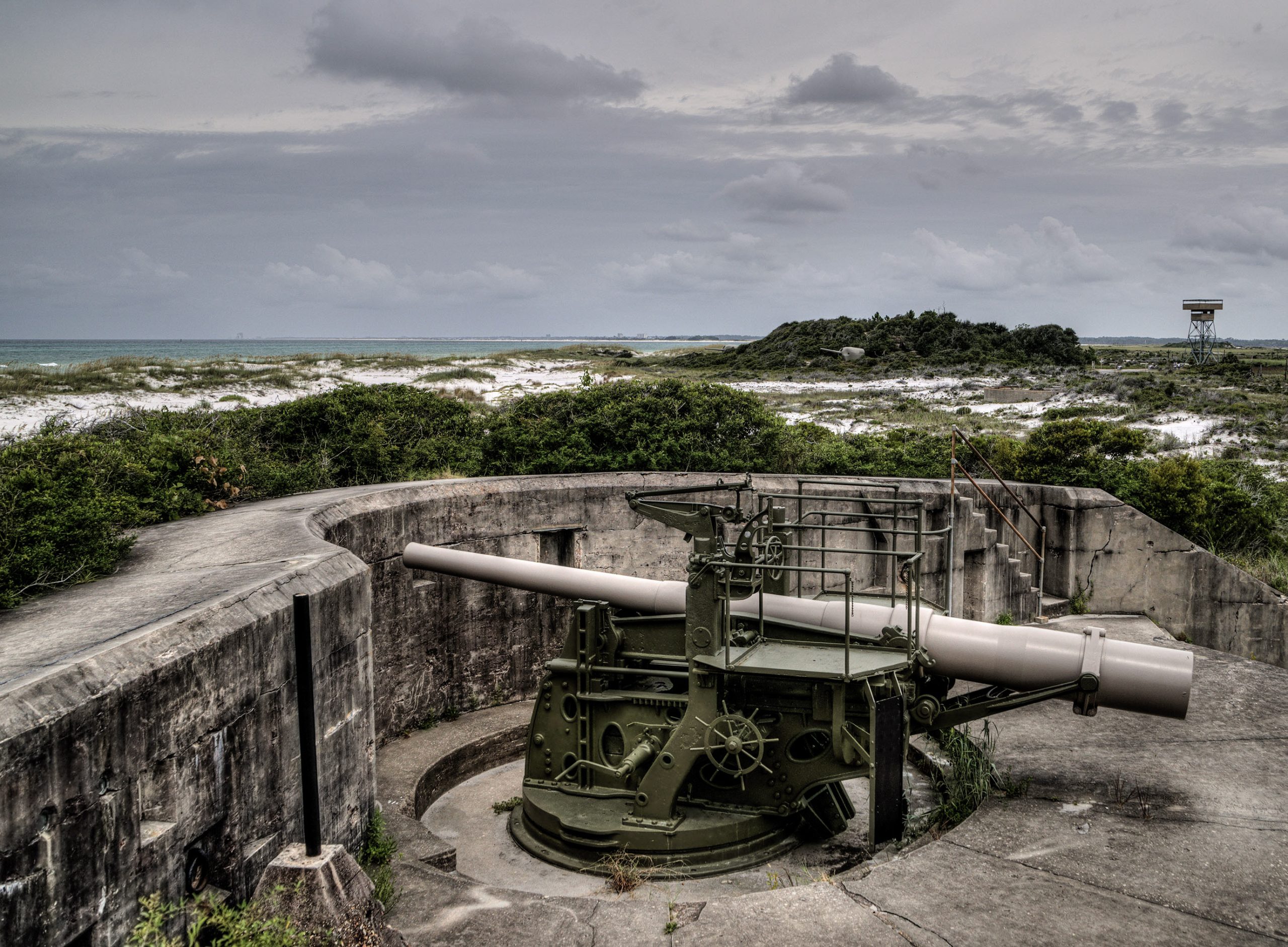
Here’s a “disappearing” gun from the WWI era. Seems to me that would be an effective defense strategy since, any adversary unless at an extreme range, would have a flat trajectory to its shell fire.
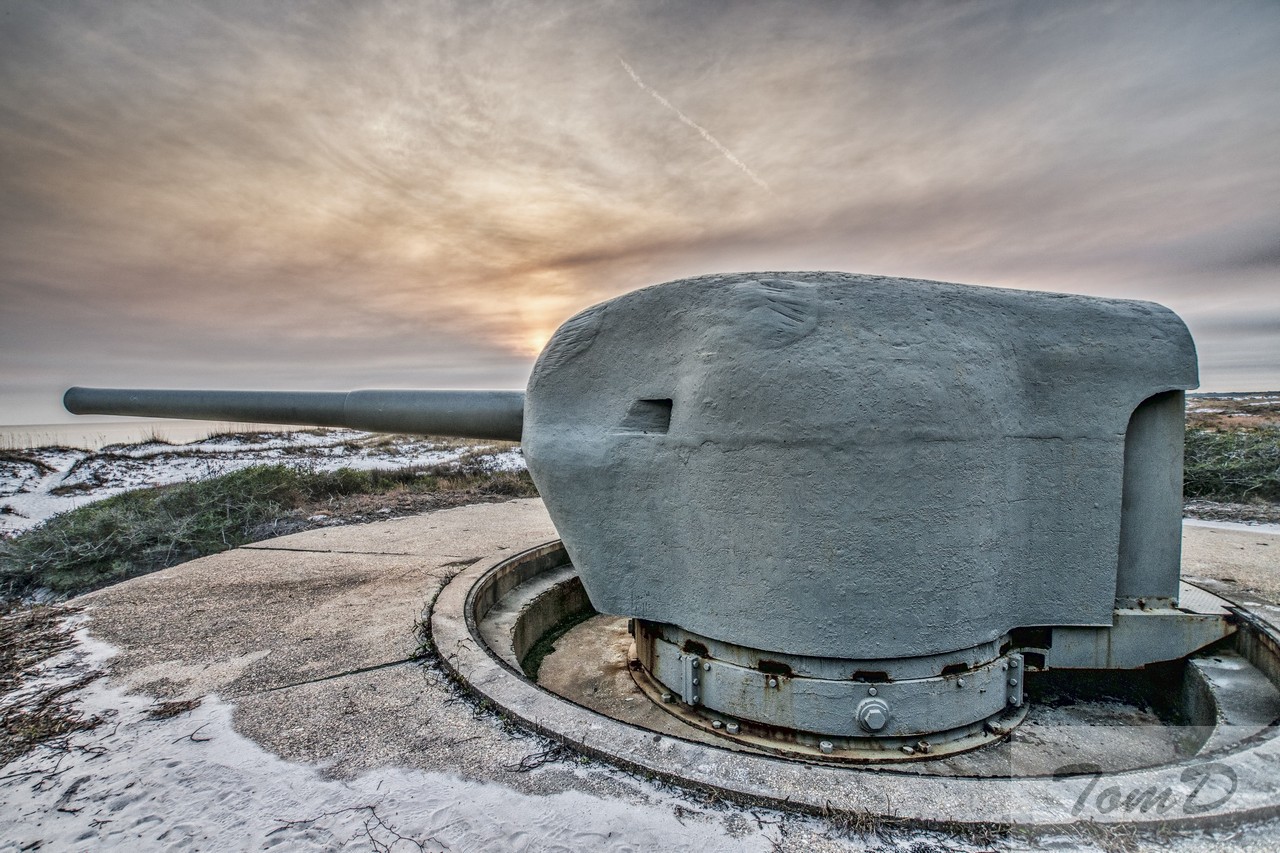
This is the 2nd shield gun at that emplacement. This picture doesn’t reveal differences from the 1st but I just like the photo as a photo.
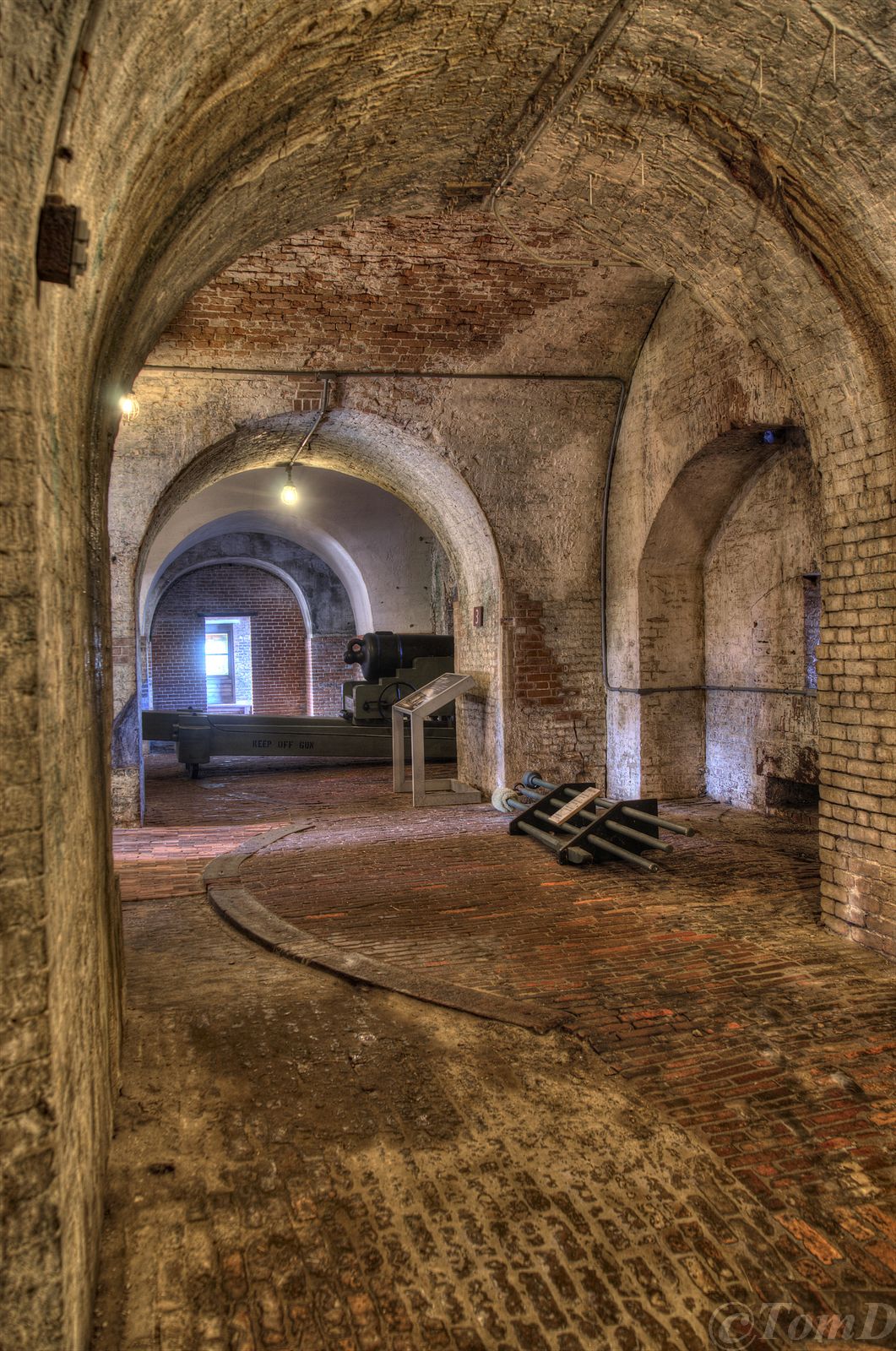
A 3rd shot of another location from in the 1830 building
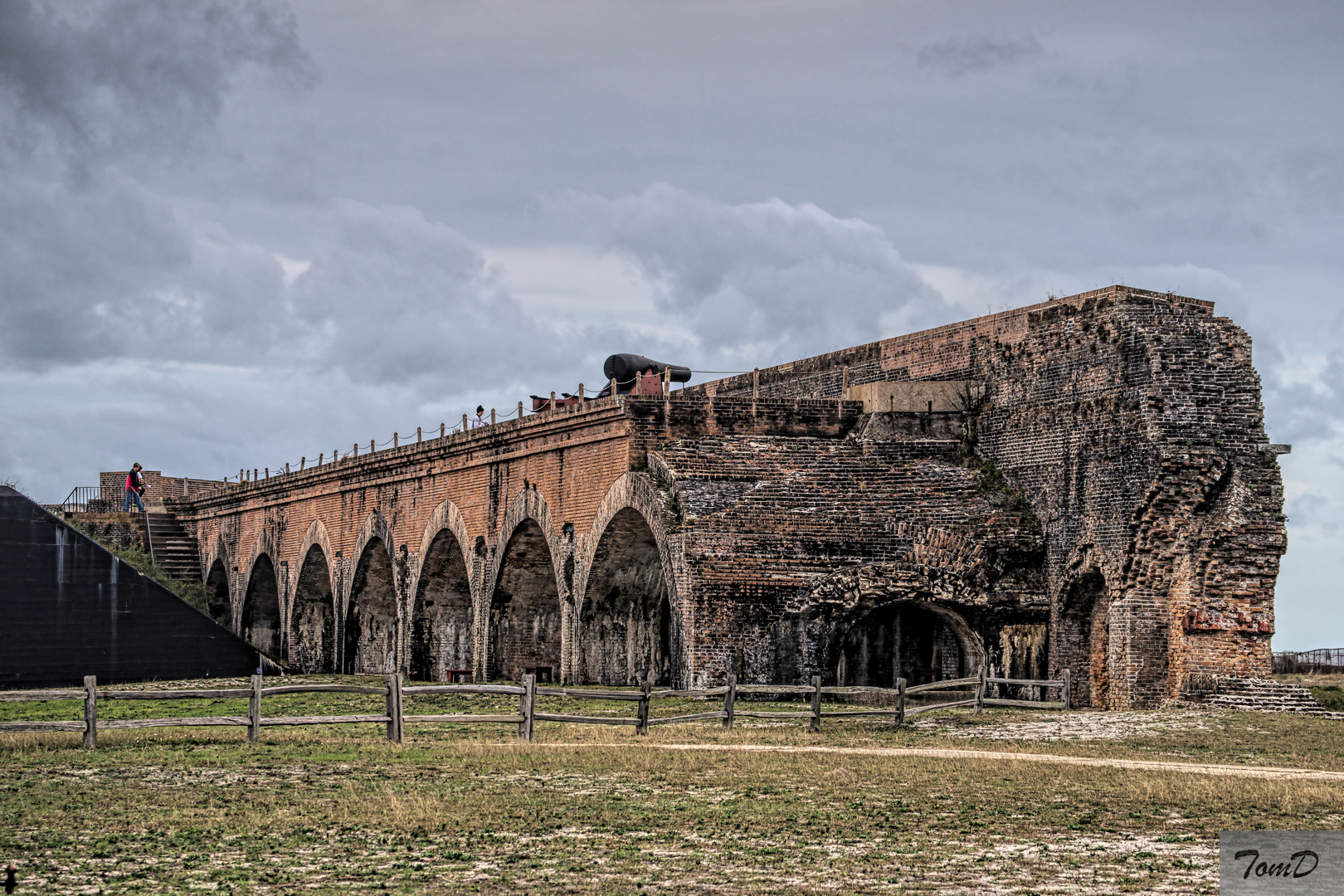
One wing of the 1830 building. It connects to the remainder of the building on the left but not the right side due to a “little” hurricane some time in the past.
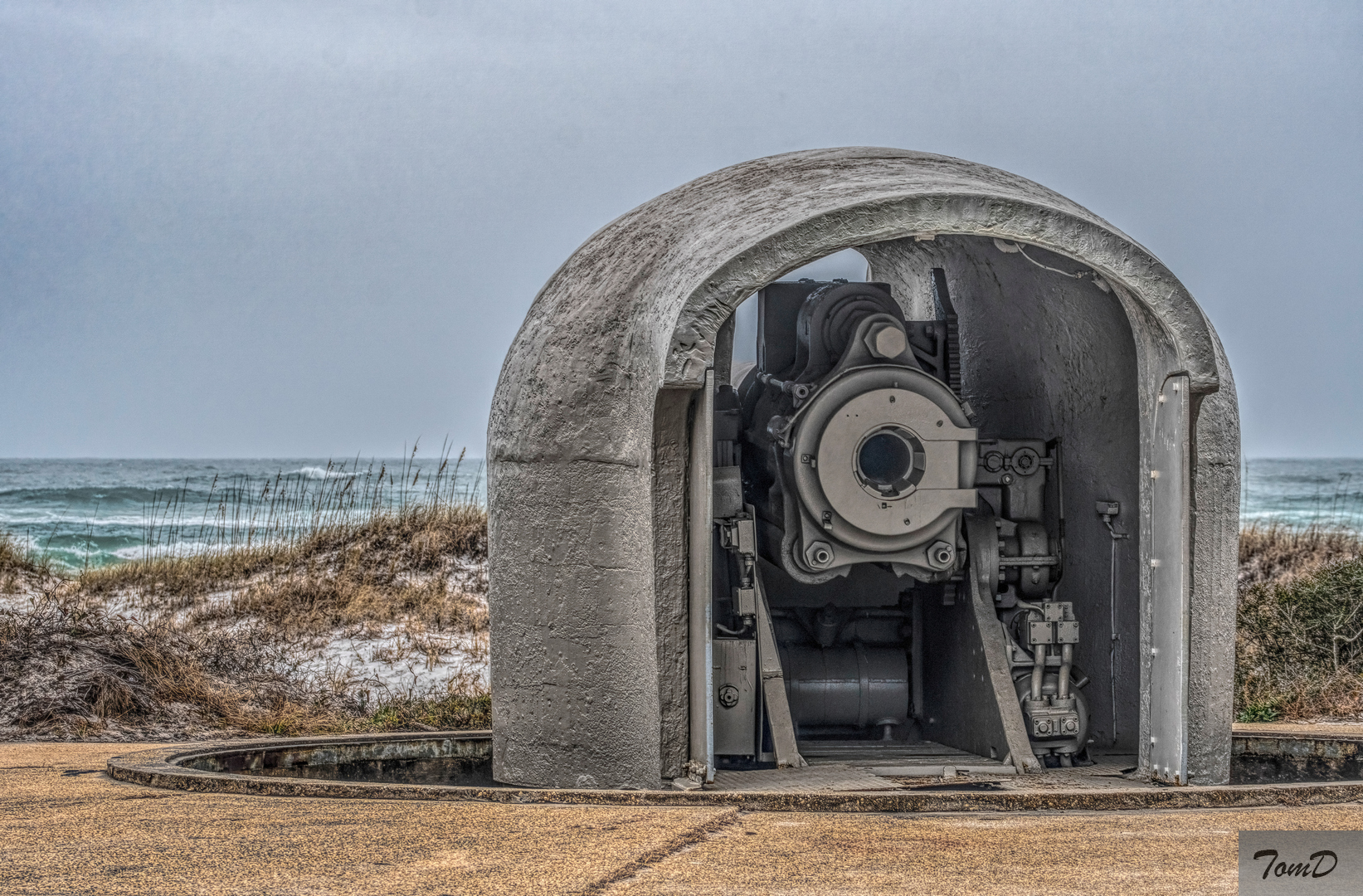
View from behind one of the shield guns showing the interior. These turrets were fully powered, as they would be on a ship. You’ll notice that the breech block has been removed. Spoil sports! They never let us have any fun, pot shots at fishing boats 10 miles out would be great sport.
You can see that the breech design is of the interrupted screw type (no jokes please). This design is prevalent with American canon types of the time as opposed to the falling block favored by many other nations. Since, the US Army at least seems to use the falling block.
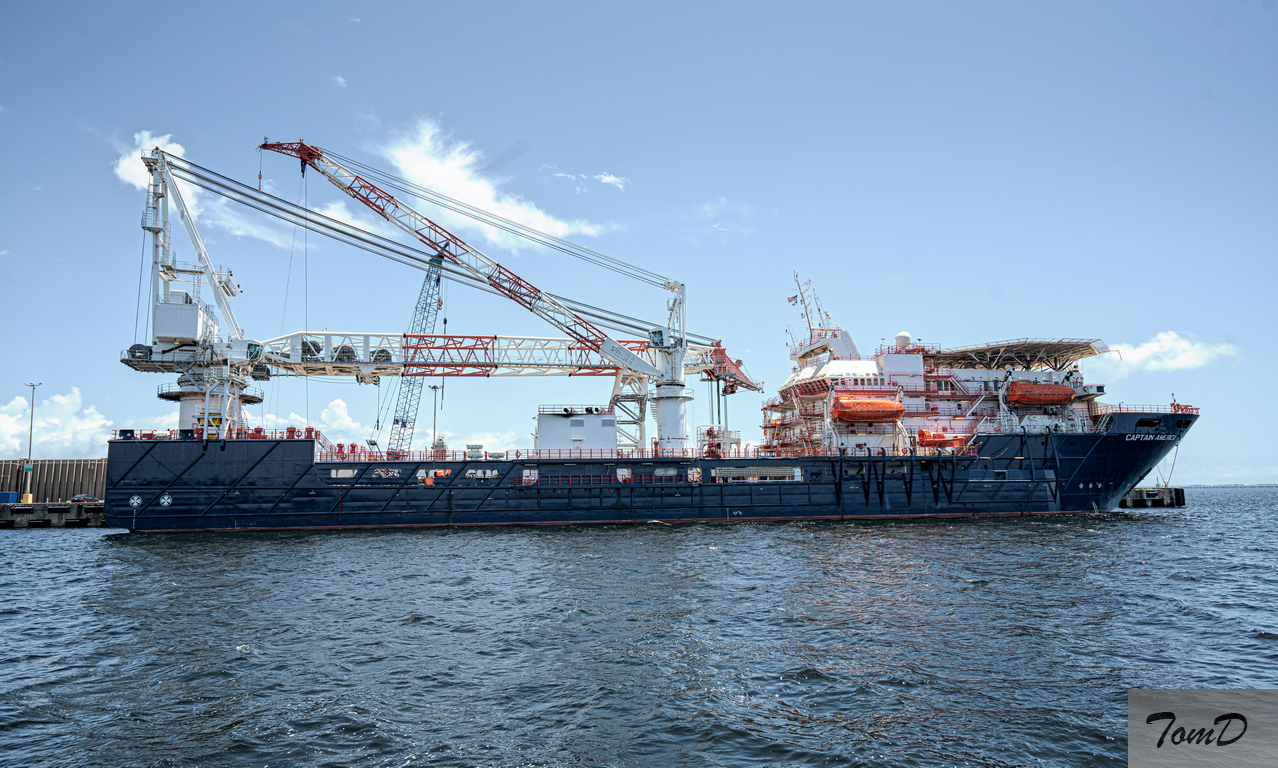
Moving the focus a little, this is still boats in the gulf and contains two oil field boats but it has two shots from a different view.
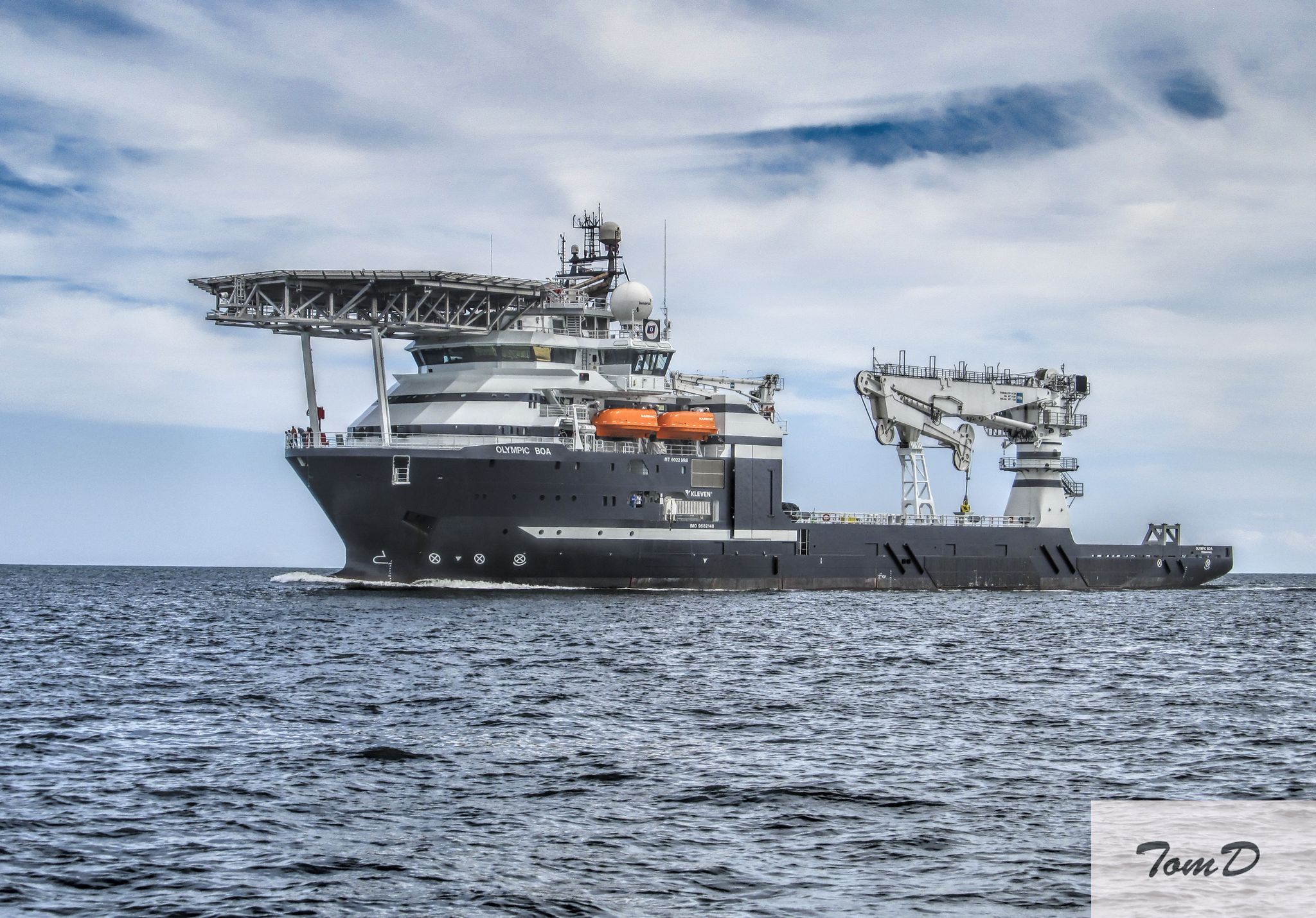
Captain America, from it’s resume: “Captain America” will be capable of involvement in offshore installation and decommissioning projects worldwide, including installing floating wind farms, says the firm. The vessel’s 399-person accommodations make it suitable for decommissioning preparatory work, platform support for maintenance, field upgrades and allow it to “provide offshore support as a flotel,” adds the firm. It has a 1,000 ton crane.
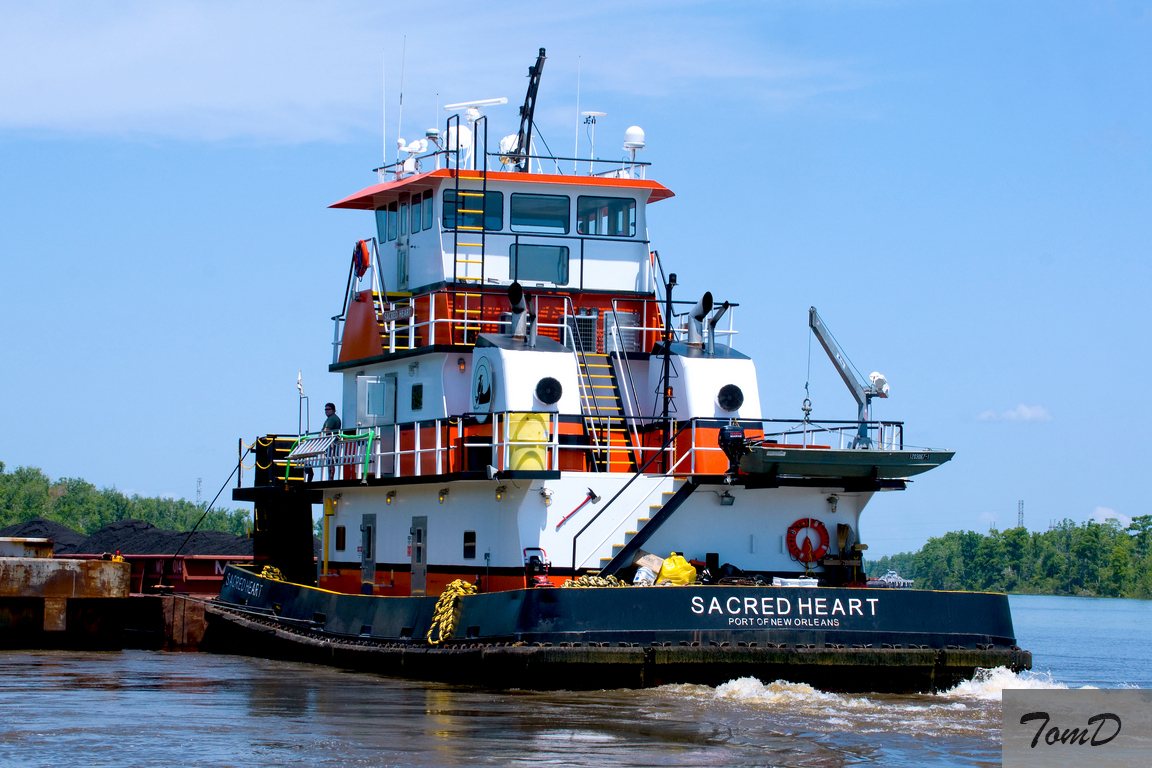
Another of the many tugs seen around here. This one is bringing coal to a local power, a calling that I suspect is short time. This coal probably come from next door Alabama. We’ve got a great intracoastal system around here, you can go for hundreds of miles from here east or west without ever getting in the Gulf which is a good thing because I’m not sure this particular rig would do well in any seas to speak of.
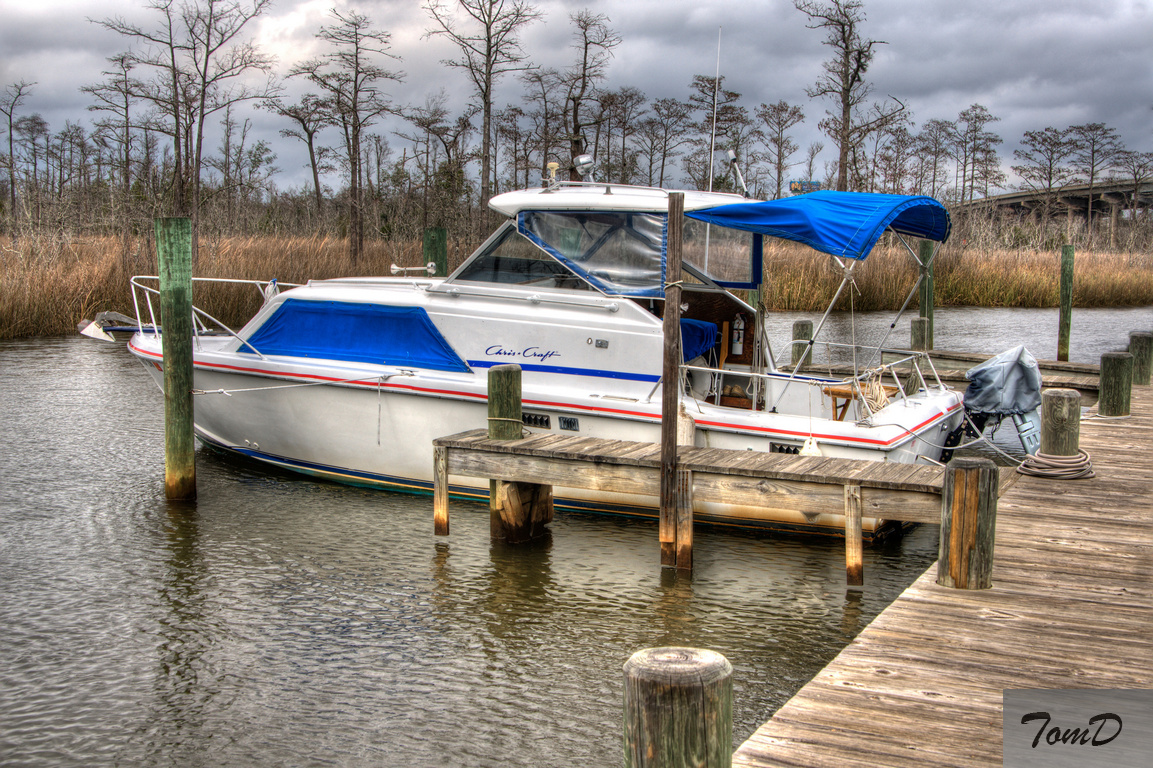
This boat is in a “less prosperous” marina located at the top of Pensacola Bay where the Escambia River empties. Those are tidal flats in the background. If you look at the flats from the vantage of the bridge in the back ground, you will see a fair number grounded boats sprinkled around (some quite big) where they were placed by various hurricanes.
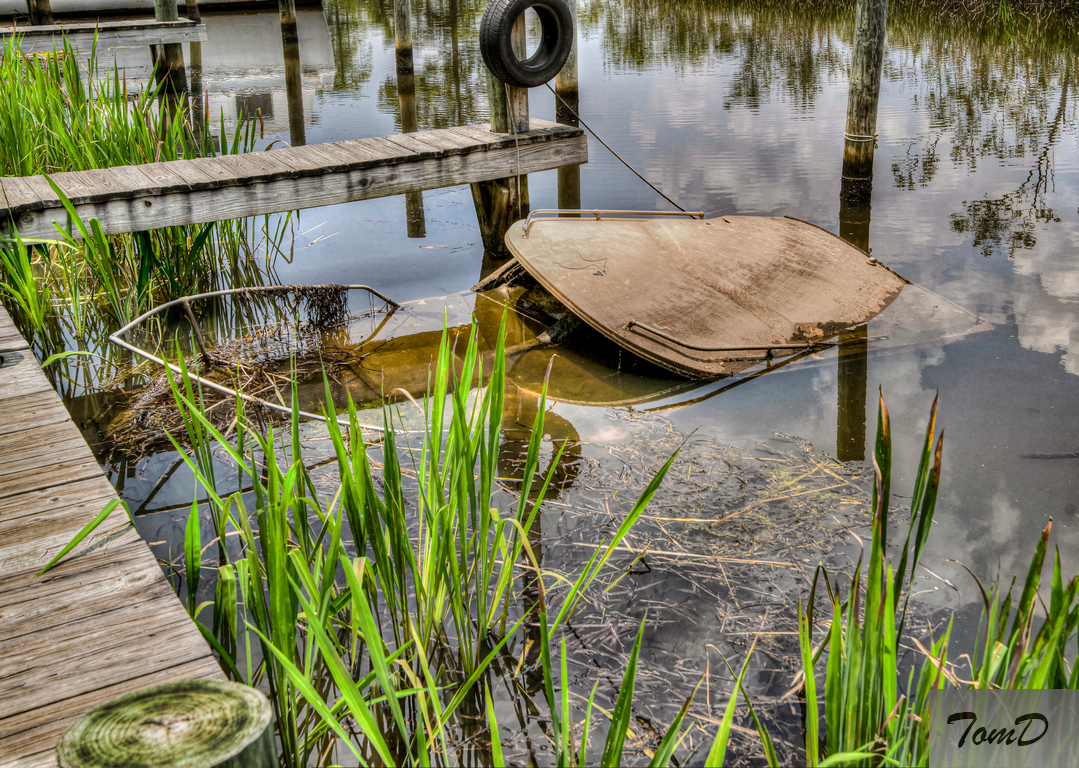
Speaking of hurricanes, this boat has been here since some hurricane or other sunk it years ago. If I were going to title this picture, this would be, “But the Payments Continue”.
Here are a few more boats that work the Gulf of Mexico oil fields.
The ubiquitous tug boat. These aren’t the largest, sexiest, awe inspiring or most anything when it comes to work boats. But they have one thing going for them, it doesn’t work without them. They’re everywhere because they are needed everywhere.

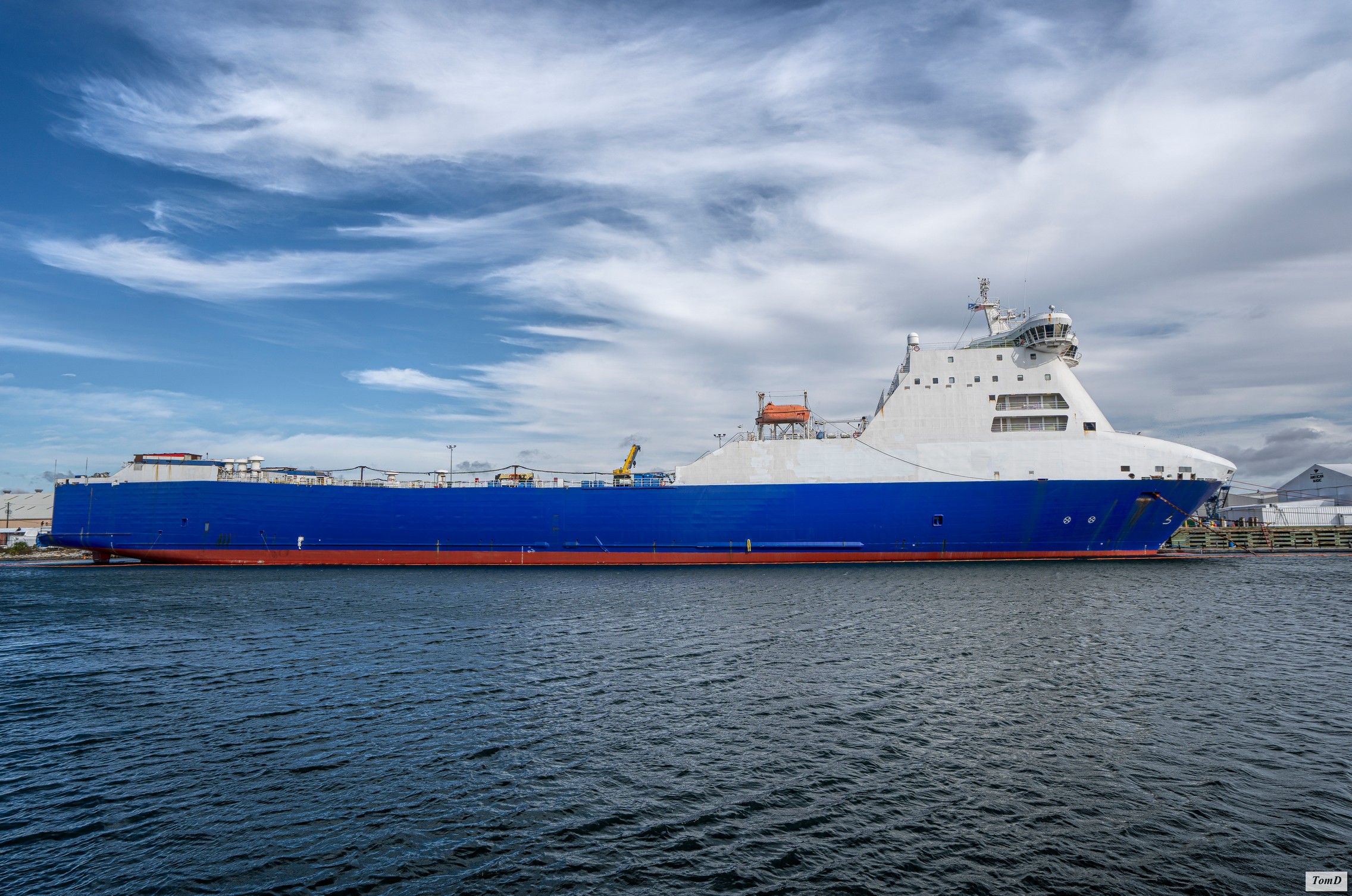
This one wasn’t a work boat. It’s an ex-roro (roll on- roll off) ship that carried cars for delivery all over the world until bought by Jeff Bezos and brought to Pensacola to have all of its superstructure cut off except the forecastle. This in preparation to operate as a landing ship for space launch vehicles. It would have operated similarly to the Space X barges. Bezos’ Blue Origin wheels ran off or something happened and his plans crashed. At the moment of this phots, the ships name was Jacklyn, for his mother.
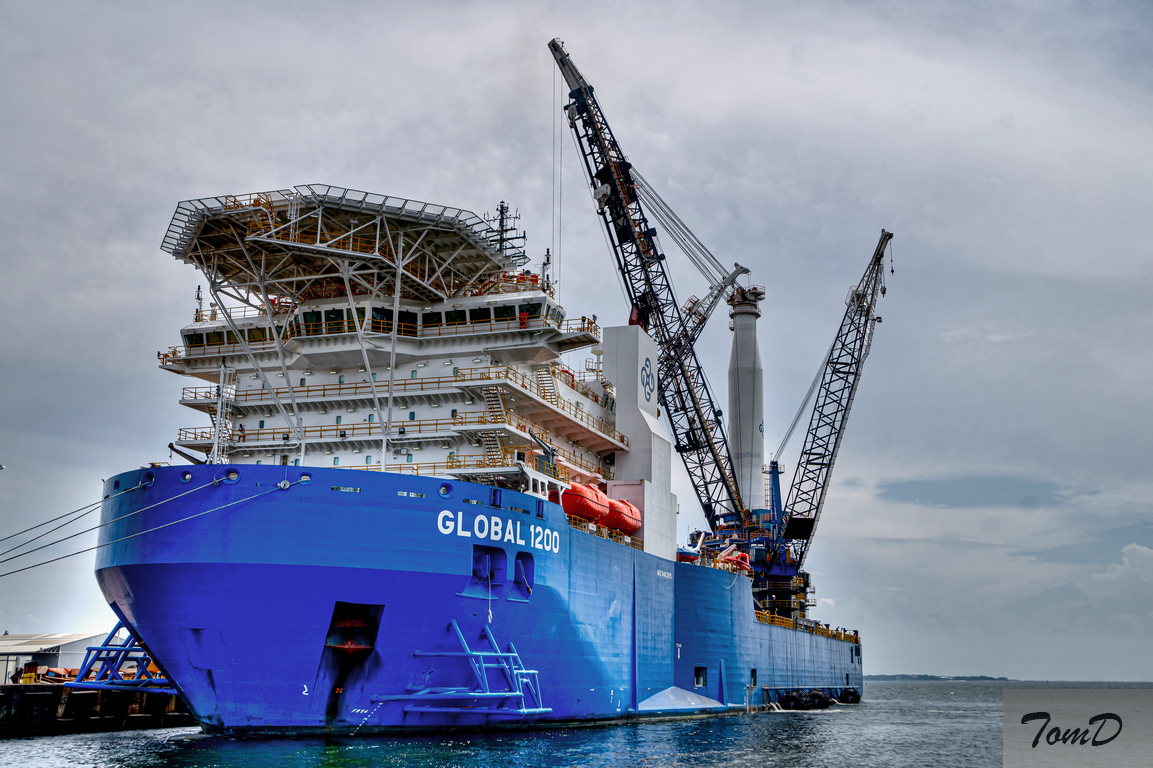
Global 2000, another heavy lift work vessel used for building and dismantling drill platforms.
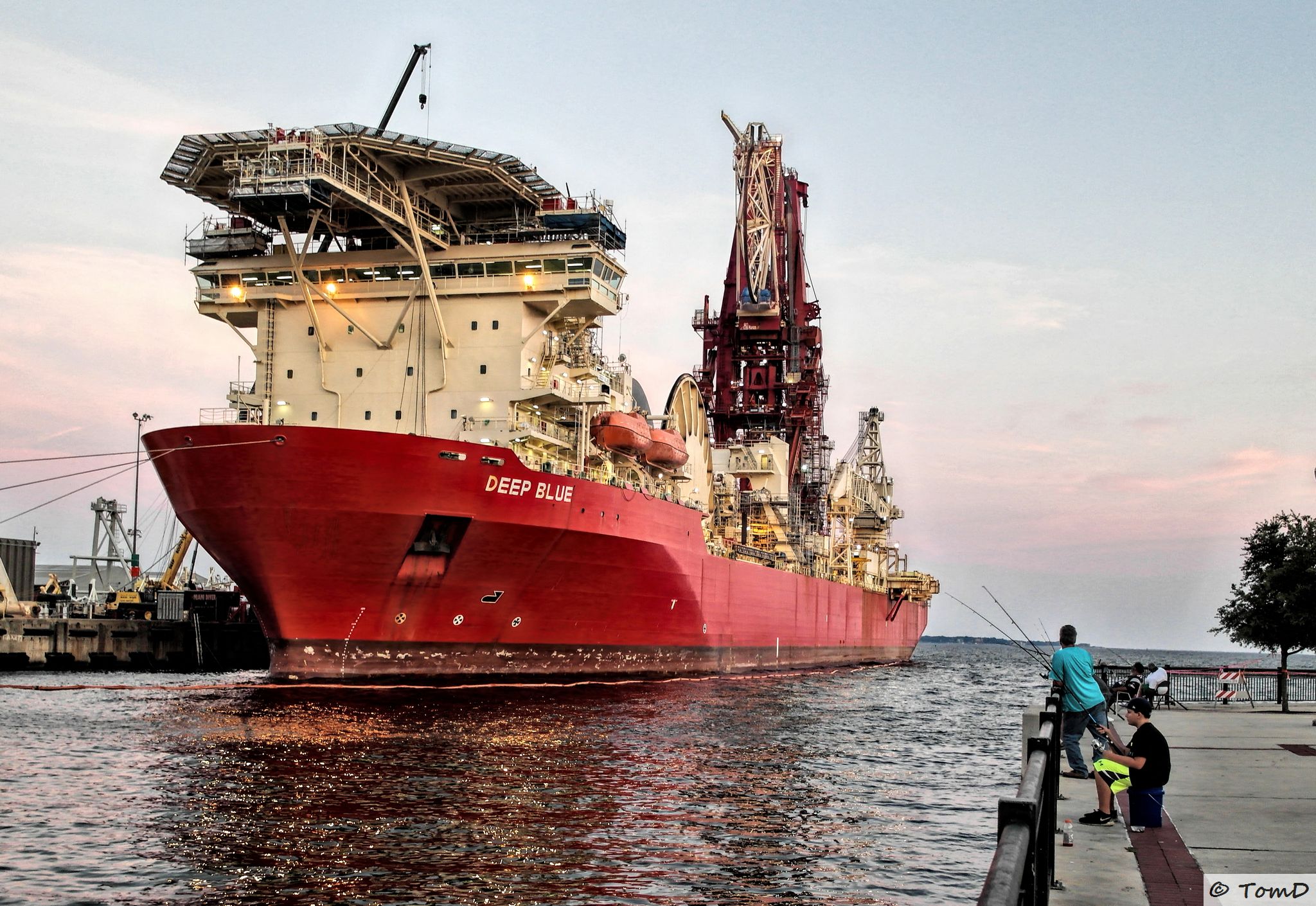
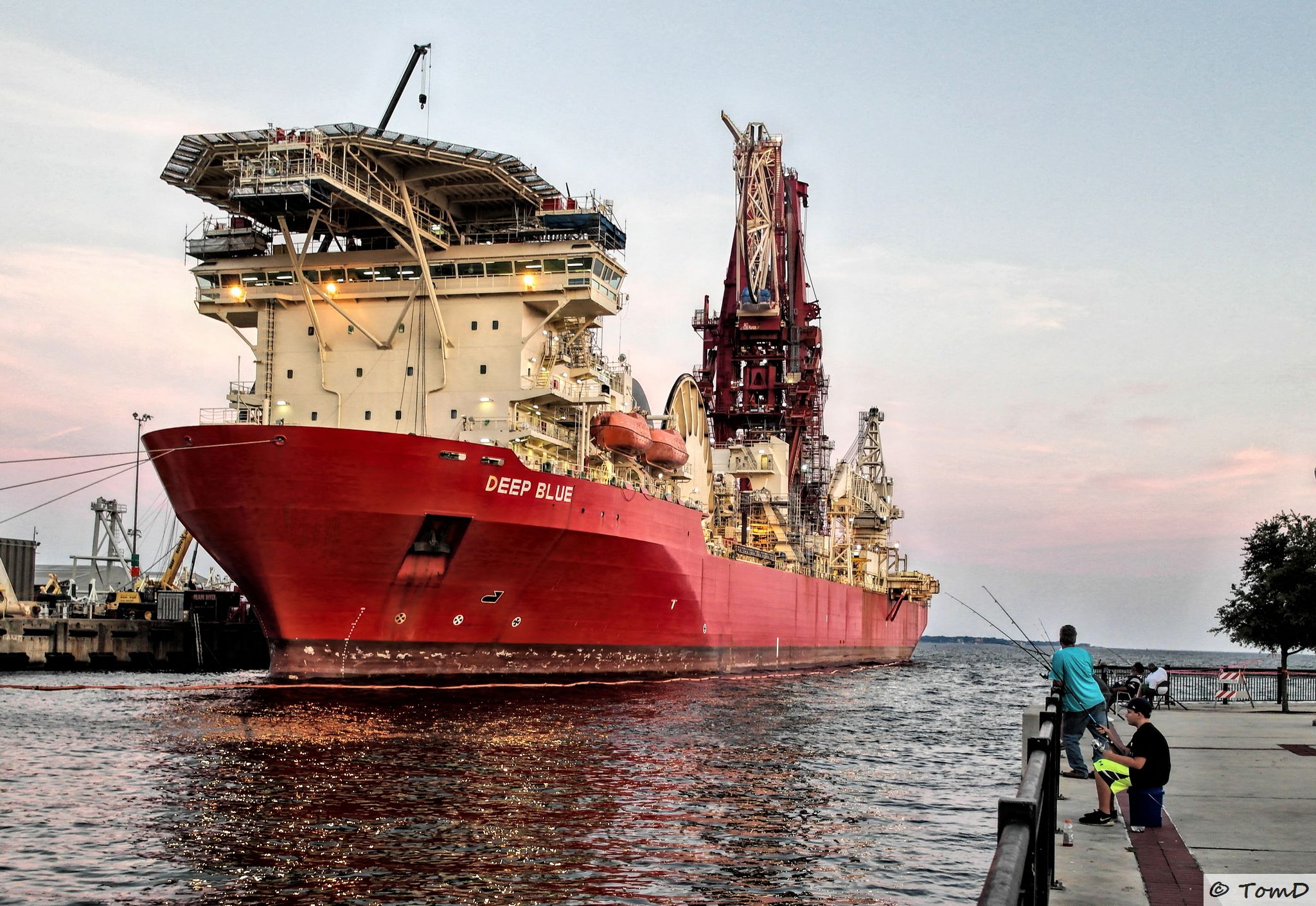
Deep Blue, makes pipelines for carrying crude from where it is drilled many miles out in the Gulf to onshore refineries. I’ve never thought it through but I wonder if the pipelines need intermediate platforms with booster pumps? I can’t imagine the needed initial pressure to push a viscous oil through 50-100 miles of pipe.
I don’t know how I missed getting photos of it but the USS Oriskiny was brought into port here to be prepared to be the largest man-made fishing reef about 200’ deep in the Gulf. It sits about 22 nautical miles (25 regular) on roughly a 150 degree heading from the mouth of Pensacola Bay. I’ve fished it a number of times but you have to be there when it isn’t covered up with dive boats. I’ve never caught anything anywhere there were a bunch of divers in the area. Can’t get too upset, I used to be a fanatic diver.
I’ve lived near Pensacola, Fl since I early retired and fled the traffic in my native north Atlanta metro. Though the local traffic seems to be building rapidly due to intense and rapid development, even the worst traffic here is almost laughable compared to the 24/7 nightmare of Atlanta.
One aspect of Pensacola in that it is on the coast of the Gulf of Mexico and has an excellent deepwater harbor. It’s deep enough that, up until the early 90’s, aircraft carriers were commonly based out of NAS Pensacola. The civilian Port of Pensacola has a marine refit and repair facility that attracts a fair amount of business repairing and refitting highly specialized vessels that support the many hundreds of oil and gas platforms throughout the Gulf. We see some seriously weird vessels that are tied up for as much as a year while they are being reworked.
The vessels are extremely specialized, some are pipe line layers, some heavy lift with huge cranes used to build or remove oil platforms, some made for carrying pipeline materials, some are supply boats, some are floating hotels. There was one boat owned by Jeff Bezos which had all superstructure was cut off and removed in preparation for landing spacecraft on its deck. I call these vessels boats but not as diminutive, some of them a huge, 800 or more feet in length.
I shot most of the boats in port but on occasion I would be off shore in my 24’ fishing boat and see one on the way in.
Another ship that I’ll later do a post on is the sailing vessel Juan Sebastian De Alcino. Pensacola has a strong Spanish heritage and was ceded to the US by the Spanish in 1822. The JS De Elcano is owned and operated by the Spanish equivalent of the US Naval Academy and is used as a training ship for the midshipmen. Each summer, the largest sailing ship currently in operation in the world goes on a world cruise, hitting ports on the way. It stops in Pensacola for a couple of days once ever 3-4 years. I spent a few hours climbing around on it a few years ago. That will be a future post.
Below, I’ll post a few pictures of some Gulf work boats.