A Great Science Fiction Story?

Lately I’ve been thinking about this topic.  What makes a great science fiction story?  Can it be a great science fiction story if the story’s not great?  How about if the science isn’t great?  I think you know what I’m saying.  A great story, meaning great fiction, has characters drawn in a way that makes them compelling.  It doesn’t have to be Shakespeare but it can’t be two-dimensional cut-outs that wouldn’t make it through a toothpaste commercial.  And by the same token, what if the science is just stupid?  Sure, you can just say it’s fantasy instead and then the sky’s the limit.  But let’s stick to science fiction.

When I was a kid, I would have said that “great” science fiction needed the science but the fiction was not that important.  If there were enough star cruisers and anti-matter bombs and giant amoebas then all was right with the world.  In fact, the fewer human relations involved in the story, the better.  I was much more interested in the non-human characters acting “realistic” than any dialog between humans.  And the male/female dynamic was completely off the table.  The last thing a Lensman needed before, during or after a battle was a woman getting in the way.

Suffice it to say that time changes things.  I look at some of the “classics” of the golden age and I see a flatness to the story.  Now, this isn’t an all-encompassing criticism.  There are plenty of stories from the day that have nuanced characters and plots that reflect actual human personality types.  So, it’s not black and white.

Now, the modern literary science fiction has been described as having the opposite problem.  It’s all about human feelings and relations.  What isn’t as important is the “science.”  When that’s the case I will just declare that if a story doesn’t have any science at all then it isn’t a great science fiction story because it isn’t science fiction.  Period.

And without a doubt if a story has an exciting plot and memorable characters and also a clever science fiction premise then without a doubt it’s great science fiction.

So that leaves the other extreme.  What if a story is built on incredibly imaginative science fiction plot devices but the characters are cardboard cut-outs of human beings?  Can that be a great science fiction story?  In this category the works of Arthur C Clarke comes to mind and specifically 2001: A Space Odyssey.  Here is an epic tale stretching all the way from the dawn of Man to the first human interstellar voyage.  And yet the most human character in the book is HAL9000; a schizophrenic homicidal computer.  Now, is it an interesting story?  Well, yeah.  There are cave men and monoliths and moon bases and worm holes.  But honestly, do you find yourself rooting for anyone?  There’s just something so inhumanly stolid and wooden about everyone in the story that I feel that each one being murdered by HAL might be his happiest moment.  At least liveliest.

But anyway, I want to pose this as a question.  Can a technically engrossing sf story be considered great if the characters are ciphers?  What do you think?

Hailing Frequencies Open!

Back in the 1960s we had a tv show called “Star Trek.”  It starred William Shatner as James Tiberius Kirk, the captain of the starship Enterprise.  And for one hour every week Kirk and his crew of four hundred able-bodied men (and women) warped their way through the galaxy seeking out new life and new civilizations and boldly went where no men had gone before.

And wherever they went Lieutenant Uhura kept them (mostly) in contact with the Federation using a form instantaneous contact called sub-space communication.  I say mostly because something called sub-space interference would be invoked whenever it would be useful to the plot for the Enterprise to be incommunicado.  This would allow Kirk to show initiative and break with inconvenient policy like the Federation’s Prime Directive against interfering in the technological development of more primitive civilizations.  Of course, Kirk broke this rule about a million times in the course of the show.  But you know, there was dramatic tension while they sorted out their feelings about this rule.

But getting back to sub-space communication, it was instantaneous.  Which was needed to make the stories work.  After all, radio waves are electromagnetic waves and propagate at the speed of light.  The Enterprise travels many times the speed of light (maximum about 1000 times the speed of light).  So normal radio communication is essentially useless for them.  They could beat their radio message back to Earth by a factor of as much as a thousand-fold.

But here’s the thing.  Suppose you want to write a story where faster than light space travel is impossible but instantaneous communication with other stellar systems is possible?  What would be the dramatic possibilities of such an arrangement.  Well, basically, it allows the writer to imagine radically different cultures and organisms sharing ideas and information across the entirety of the cosmos.

You could have a supremely old race teaching a young one how to avoid all of the dangers that it experienced.  And they could teach them about their future.  Suppose a race on a planet is circling a star that is about to explode.  What would they want to pass on to the universe?  Maybe some religious insight or a supremely beautiful musical composition or maybe just their name; so, they would not be forgotten after they die.

Now of course instantaneous communication is as completely untethered to scientific reality as warp drive is.  But I can still see how using it in a story without FTL space flight would present story lines that aren’t as well-explored as ones where FTL space flight exists but “sub-space” communication does not.

Now all this being said, I will say that Lieutenant Tawny Madison, played by Sigourney Weaver in the movie Galaxy Quest really improved on Lieutenant Uhura’s performance as communications officer.  Her costume was significantly skimpier and showed much more cleavage than Lieutenant Uhura ever did.  And Madison didn’t need to wear an ear piece to hear the computer tell her what the ship was doing.  All she had to do was repeat what everyone else could hear over the ship’s speaker system.  Now that was progress.

For Halloween Fans

Tyler over at the Portly Politico has a link to some of his content that would be of interest to all those who get into the spirit of Halloween.

“I did a whole series on my YouTube channel during October about various Halloween and/or horror movies, 31 Days of Halloween:

I think you’ll enjoy it!”

Guest Contributor – Tregonsee – 10OCT2025 – SF Longevity

There have been several SciFi takes on this. Three stick out to me beyond Heinlein’s tales of Lazarus Long. These are Niven’s Boosterspice in Known Space, Blish’s antiagathics in the Cities In Flight, and Weber’s Prolong in the Honorverse.

My memory on Cities In Flight is poor, but I think the antiagathics were rare and kept only to the upper class so it has limited effect on it’s society other than envy of the upper classes.

In both Known Space and the Honorverse there is a tendency for careers to be MUCH longer. What would have been generational wealth tends to be personal wealth over time. Prolong gets you 200-300 years in very good shape.

Boosterspice is unlimited, Louis Wu is celebrating his 200th birthday at the start of Ringworld and hangs around MUCH longer(potential spoiler for a 30-50 year old series 🙂 ). There is a hint in a later Known Space story that, over time, Boosterspice also makes Humans VERY risk averse (though not quite Puppeteer risk averse).

In the Honorverse Prolong also seems to extend the period of fertility so 100+ year old couples can be seen having children much later in life. I do not know about boosterspice.

At the time of Ringworld, Earth is still run by the UN and the birthrights system, but little is said otherwise. That said Teela Brown had not yet had boosterspice when she (presumably 20 something) heads off to the Ringworld(again potential spoiler). This might suggest that although extending life the effect on fertility is either negative or irrelevant so reproduction is limited by the normal span of ~ 40 years.

You Pays Your Money and You Takes Your Choice

So, I learned some stuff today about publishing a book.

  • There’s no such thing as an objective authoritative critic who can tell you whether your book is good, bad or indifferent. In other words, “You pays your money and you takes your choice.”  If you believe your book is good then you take your chances.  So that puts the onus back on me.  Do I believe in my book or not?
  • After you write it and put a cover on it and edit it, then you have to get influencers to tout it and reviewers to praise it. But after all that you have to advertise it on Amazon to the tune of thousands of dollars.  Otherwise, no one will know it’s there.

Well, now I’ll have to search my soul and decide just how much I want to get my book out in the world.  Do I put my money where my mouth is?  I guess I’ll find out.  Now, all this is still preliminary.  I have to get a cover and get an editor to tell me about all my typos and inelegant grammatical constructions.  And get a marketer to “alert the media.”  And for the next month I’m going to be buried under a project that will prevent me from concentrating on anything important.  But by the third week in November, I’ll be available (other than a Thursday where I’ll be buried under cranberry sauce and pumpkin pie).

Well, it was definitely a clarifying experience.  There’s no way to pass the buck on a thing like this.  The author has to search his soul and use the wisdom of Solomon to make the correct decision.  Well, so what?  What’s Solomon got that I ain’t got, in spades?  Darned right!

So, if you drive through Dunwich and you see a disheveled geezer picking up bottles and cans on the side of the road, it may be me trying to raise enough capital for the project.  With any luck I’ll strike oil in the north forty and I can start on the gold leaf hardcover edition that all of us “real authors” like so much.

Okay, so enough moaning and groaning.  The journey is the reward they say.  So, I’ll just follow my nose and see where all this ends up.  Of course, if I get too enthusiastic Camera Girl will wonder why the checking account has gotten so anemic.  And that could trigger all kinds of hazardous situations.  After all she has complete control over my food supply and knows my sleeping habits.  But I won’t allow artistic decisions to be influenced by cowardly and pedestrian concerns. “Ars gratia artis,” you know.

Well, back to something comical; the government shutdown!  I hear Trump is going to permanently terminate “hundreds of thousands” of federal employees to get back at the Democrats for shutting down the government.  That’s a pretty bold move.  I’m starting to believe there are no limits to what he plans to do to the federal government.  He seems to be borrowing Obama’s statement that he would “fundamentally transform the United States.”  And at this rate maybe Trump will actually do it!

I Am Oz, the Great and Powerful!  Who Are You!

Tomorrow, I have an appointment to talk with a marketing expert.  Someone who gets paid to say how to market a book so that people will find it and want to buy it.  What are my expectations?  Surprisingly, I’m not expecting miracles.  What I’m hoping to do is learn what the limits and parameters are for this kind of service.

For instance, what is the reach of this business?  What is the specificity?  I’ve been led to believe by everything I’ve read that Amazon and Google can target ads to someone based on what they want to buy right now.  Well, okay so how much does it cost to target only those people?

Another thing I’m interested in is pricing.  Obviously the lower the price of something the more people will be willing to buy it.  So, there is probably an optimum price for maximizing profit.  But what if you want to maximize the number of people who read your book?  Is zero and option?  And is some minimum price just as good?

And I want to know if these experts are well-acquainted with right wing readers (my target audience).  After all, I’m not selling to the people who read “A Handmaid’s Tale” or “Woman on the Edge of Time.”  Those people would be rooting for my villains.  So, I want to know how specific they can get with the audience that they are reaching as potential readers.

Also, I want to know if they can tap into expert critical opinion to tell me ahead of time whether my story even has potential to interest a large audience or not.  They might be able to convince me that I’m attempting the impossible.  That piece of information alone would be extremely valuable to me.  I mean, sure, I’m just like every author.  I love my creation and think it worthy of an audience.  But maybe I’m very wrong.  Knowing that ahead of time could save me a lot of money and pain.

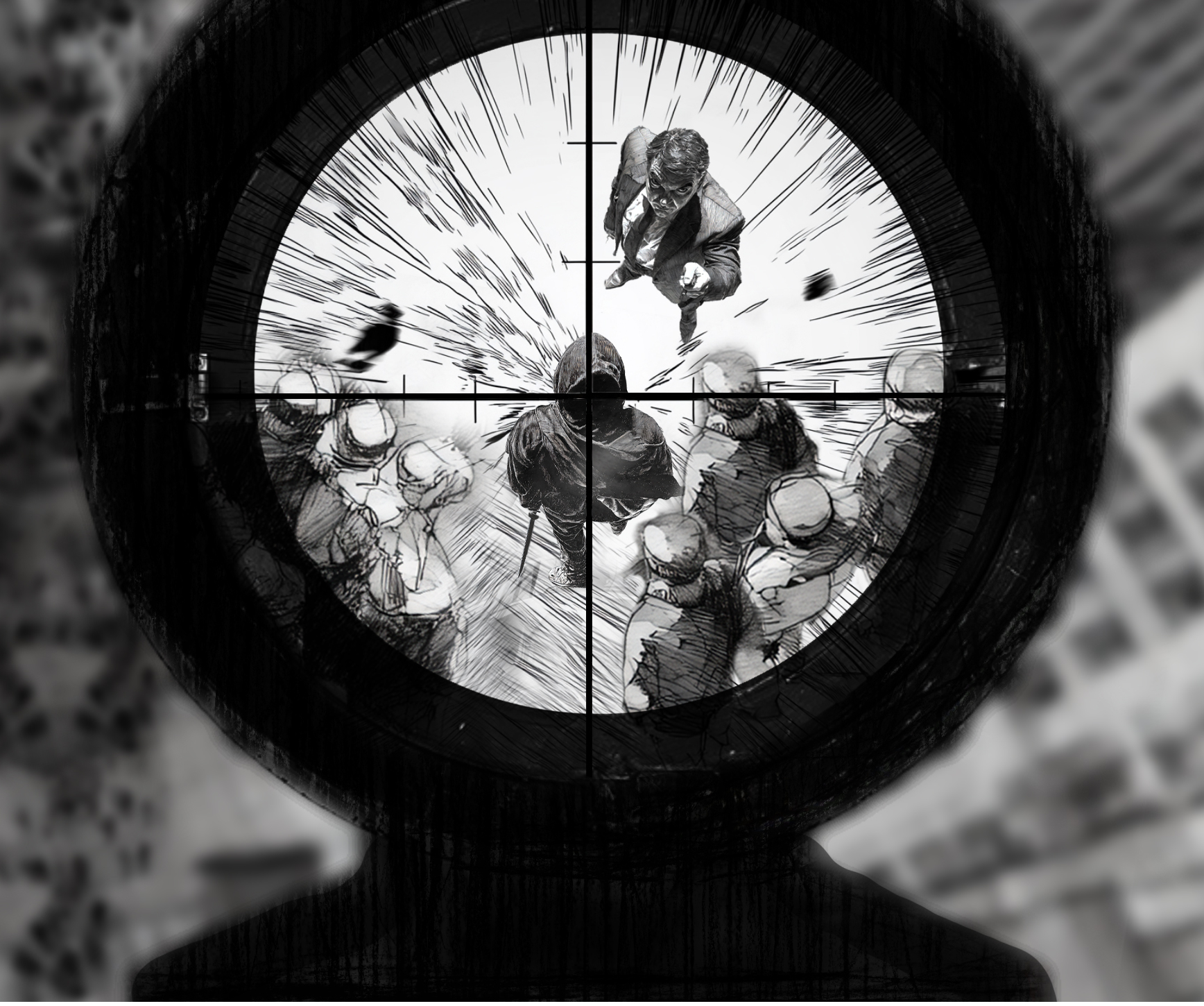
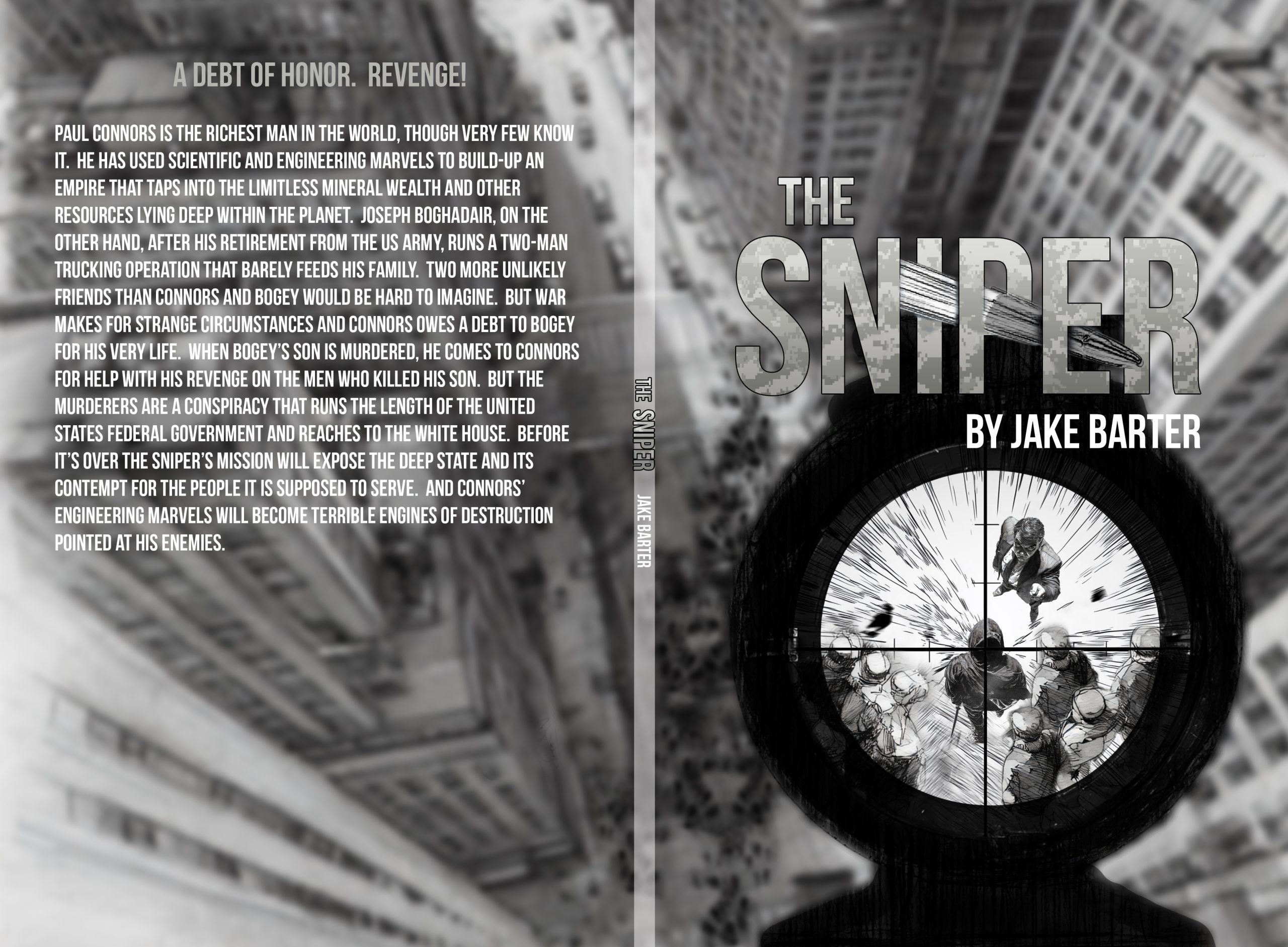
So, I’ll spend tomorrow collecting my thoughts and writing down questions to ask the “Wizard.”  One thing I’m interested in is how important a cover is.  Sure, a glossy cover with a sniper on a building above an Antifa riot would really hammer home the story better than just a text but what is the actual difference in sales?  Could I compensate by dropping the price to $0.99 for a few days or weeks to get word of mouth?  After all aren’t most books now e-books?  Do people need a cover when they’ll be reading the “book” on a Kindle?

And finally, I’m intrigued by the idea of running a Kickstarter to try and drum up funds and give the project visibility before the book is even up for sale.  I recently watched Larry Correia run a Kickstarter and he’s gotten $250,000 in advance sales.   Now I’m not kidding myself.  He’s got an enormous fan base already so there’s no comparison but still, the “GoFundMe” site has high visibility for whomever uses it.  So, I’ll ask about that too (even though I think I know what the answer will be).

So that’s what my Thursday looks like.  Maybe after tomorrow I’ll have a new perspective on selling my book.  Or maybe I’ll be even more confused than ever.

Tomorrow the Stars – A Science Fiction Book Review – Part 1 – Poor Superman

A while ago I spoke of buying a book I owned fifty-some-odd years ago.  So, here’s a story from that book to talk about.  The author Fritz Leiber was pretty popular back in the day.  So, I don’t intend to rewind the plot here because it’s a short story (twenty-eight pages) and anyone can find it out there in the public domain, I’m sure.

But I just want to give some impressions of the best aspects of the story.  This is explicitly a post-apocalyptic world.  New York City and Washington DC are craters.  And because of the disaster the US government has been supplanted by a regime called the Thinkers.  They are frauds who have convinced the populace that they have supercomputers and atomic rockets that go to Mars to commune with the all-wise Martians and something called the “Mind Bomb,” etc., etc., etc.  The real scientists have been cowed into keeping quiet and the nominal leader is a guy named Jorj Helmuth who was a publics relations specialist in the before time but now believes his own hype and thinks he’s a master of sleep learning and hypnotism and whatever else he’s made up.

The story is basically the maneuvering of Jorj, his cronies, the scientists and a few other actors on stage.  Leiber lays out the story and the characters in broad strokes but very skillfully and it’s fun to recognize the Soviet (and American) propaganda playbook being run to fascinating effect.  It’s a cautionary tale about idealism and chicanery and power politics and the danger of believing in your own lies.  And even thought this story was written in 1951 it reads the same as if it was written today or tomorrow.

And it has a great villain who just exudes realpolitik and a feme fatale and even a twist ending to make sure you don’t forget that it’s from the golden age of science fiction.  And even the title of the story is the punchline.

All these same people inhabit our present world.  The lies and make believe from then is no different from the BLM or Antifa grifts that we see all around us.  Probably the closest thing would be the climate change scam that has bankrupted Europe and exacerbated the monetary problems we’re experiencing.

So, that was fun.  There are a few more stories in the book that I’ll highlight in later episodes of this book review.  But I’ll say that “Poor Superman” is the crème de la crème of the entire collection.  And since it’s the last story in the book you finish it off with a smile on your face.  See, that Bob Heinlein really knew the trick to editing an anthology.  Make sure the last story leaves them wanting more.

So, who remembers this story or at least remembers the name Fritz Leiber?  Surely, I’m not the only old science fiction fan here and I’d love to get some other opinions.  After all, I’m just one man.  And I’m not even superman.

Another Psycho-Killer, Another Book Lesson

Another day, another psycho leftist shooter.  As I said the other day, be prepared for an almost endless sequence of these suicidal people.  Their lives are a misery to them so they want the rest of us to suffer too.  Only in addition to everything else that was wrong with this guy he even failed to accomplish what he set out to do.  He wanted to kill ICE agents and instead he killed and wounded illegal alien detainees that were in an ICE van.  Now that level of incompetence and stupidity really does deserve the Darwin Award.  And right there with the shooter’s idiocy, the Left is trying, once again, and to no effect, to question whether the shooter was a Leftist.  Well, give it a day or two and they’ll settle for, “He wasn’t a card-carrying member of a terrorist left-wing organization, which is another way of saying these organizations don’t have cards.  Their badges are the crazed looks on their faces and the social media memes and buzzwords of the left.

Well, enough of that.

Some of the results from the beta-readers of my novel are coming in and the consensus is that this guy photog must be out of his mind if he thinks anyone is gonna read his awful book.  As reader after reader disparaged its characters, plots and even adverbs I was like a cornered wild animal looking for some way to escape the tsunami of negative results.  I yelled, “Nooooooooooo!!!!!!!!”  Well, maybe there weren’t that many exclamation points in real life.  But I was pretty busted up.  So, I took a bottle of Tylenol and washed it down with a gallon of grape Hawaiian Punch and pretty soon I was really sick.  But that took my mind off my book problems while I headed to urgent care.  Now that I’ve mostly recovered, I’m happily in denial and working on an alternate reality where I’ve sold more books than James Patterson and am twice as handsome as Brad Pitt but somehow it turned out backwards.  I’m unfortunately, twice as handsome as James Patterson and have sold more books than Brad Pitt.  You know it really is important to work these things out ahead of time.

I have an appointment to talk with a marketer who specializes in self-published books and I’m trying to put together a list of questions to ask.  At the moment all that comes to mind is, “How can I become fabulously wealthy from my book without putting in any effort at all?”  And I think I’ve nailed it.  That is exactly what I want an answer to.  But I have this nagging suspicion that there may be more to it than that.  I seem to be confusing marketer with the genie from Aladdin.  Well, you can hardly blame me.  Both of them are in my mind, mythical creatures with supernatural powers.  But seriously, this whole book thing has been an interesting experience.  I’ve learned that writing is a craft that requires lots of work and especially in the planning stages.  Writing a story by the seat of your pants seems more intuitive and natural to me but I now understand that building the story ahead of time saves time at the end when re-writing is extremely painful and maybe impractical.  Well, the journey continues.

Guest Contributor – Chemist – 24SEP2024 – Death of SF Magazines

I have always enjoyed the shot story format. For a while, in the 60s & 70s, some of the big name authors were competing with each other to write a complete story on the back of a picture postcard. Some of these were amazingly good!
As for Analog, I gave up on it a long time ago (30 years?). Their Science Fact articles were all doom and gloom:
“We are all going to die and thee is nothing you can do about it!”
Or:
“Here is why FTL travel, Nuclear fusion, laser defenses, etc. won’t work and cannot work.”

And, to me, the Fiction was woke before woke was a thing. So I stopped buying after I realized I had a years worth of issues that I had not read and could not motivate myself to read.
I suspect that Analog (and maybe the others) got infected by the same liberal women who took over the NY publishing houses.

Another datapoint: I recall talking to a successful SciFi author in the 80s who switched from writing short stories to novels. When asked why, he said: “Its just as hard to sell a short story as a novel, but novels pay a hell of a lot better.”

BTW, Photog, another non-woke publishing house is Chris Kennedy Publishing.
You might consider sending him a copy of your novel.
https://chriskennedypublishing.com/

Just Something that Came to Mind

Lately there have been a lot more options if I wanted to talk about what’s in the news.  There’s all kinds of Jimmy Kimmel talk.  He’s off the air, he’s back on, he’s gonna apologize, his show won’t be carried in a quarter of the country, blah, blah, blah.  And Donald Trump just got through trashing Joe Biden and the UN in front of the General Assembly.  There are psychopaths shooting up innocent victims everywhere you look and Democrats are desperately kowtowing to Mamdani hoping he can provide the magic bullet needed to bring back the millions of voters who are jumping ship.  Yep, there’s all kinds of madness everywhere you look.

But I can use a break from it from time to time.  I just get fed up with the awfulness of the world and the awful people doing awful things.

So, let’s talk about something less depressing and maybe more interesting.  A while ago I mentioned I bought a copy of a book I owned back in the stone age.  It’s an anthology of science fiction stories published in the 1950s, edited by Robert Heinlein, called, “Tomorrow, The Stars.”  There are fourteen short stories in the book’s two hundred and forty-nine pages.  They’re all between ten and twenty pages long and were written by authors “famous and less well known” at the time.  Interestingly, one of the less well-known authors was a certain, “Kurt Vonnegut Jr.”

So, I’ve been rereading these stories, some for the first time in over fifty years.  I won’t pretend that they’re all equally good or that any of them are timeless prose.  They’re not.  They’re pulp fiction or maybe slightly better than pulp fiction.  But they’re also entertaining.  They amuse.  They keep the reader’s interest.  They tell a story.  All that good stuff.  But what’s my point?  I’ve read lately that science fiction short stories are an unsellable product.  All the magazines and the anthologies are going bankrupt.  No one will buy them.

Back in the dark ages magazines like Analog and The Magazine of Fantasy & Science Fiction made plenty of money selling monthly editions filled with mostly just short stories.  Sure, they would also serialize some novels but mostly we were reading short stories by authors, “famous and less well known.”  Now I am well aware we are living in a new age.  Theft of intellectual property has been the downfall of all the formerly lucrative entertainment forms.  CDs, DVDs and books have been pirated out of existence.  Young people have been conditioned not to pay for anything.  Everything is a streaming service.  Amazon sells books by the penny/a page method.

Yes, yes.  I get all that.  But these are just the technical details of our age.  Piracy has always been around.  What it takes to sell a product in the face of these kinds of obstacles is the same thing that is needed in any other place and time; creativity and psychology.  And in fact, a short story would seem to me to be the easier sell.  You can read (or hear) a short story in a car ride or a subway commute or a high school class that you don’t want to listen to.

Sometimes you don’t want a four-hundred-page epic fantasy.  Sometimes you don’t even want a novella.  Sometimes you want a ten-to-twenty-page story to take you out of your life for a half hour.

Just something that came to mind.