Here’s my insect picture. I call it Lepidoptera Attacks

All the Secrets of the Universe and Some Really Important Stuff Too!
Guest Contributor TomD’s Content
Though I hate to admit it, I seen nothing in Trump’s temperament or previous governance to indicate that he is the man to do it. In his 1st term, there was nothing accomplished or even proposed that would indicate debt reduction was an even a low level priority. Remember the early covid days and the multi-trillion dollar public buyoffs sent as $2000 checks per family?
Reality is that the issue won’t be dealt with until reality shows that it ultimately WILL be dealt with. At some point, a tripwire will occur and hyperinflation will start. If you have a good memory and track retail prices, you will have to conclude that inflation has been significantly larger than officially stated. Especially since the covid era.
There is nothing on the political horizon from any political entity that indicates a willingness to take on budget and reduction.
Debt reduction will occur via inflation, whether severe or hyper remains to be seen.
The average US house is climbing toward $500,000, average car $50,000, hamburger over $7/lb, good ribeye $18+/lb, etc, etc, ad nauseam. “Tom’s Official Inflation Monitor Based On the Price of Cat Food” tells us that a 5.5 oz can of Friskies cat food which sold for $.38/can in 2020 now costs $.87/can. Everything else is on the same slope.
Solve for X ( 1+X%)^5= 2.3 Hint, around 18% per year.
And this curve will not prove to be linear.
What do you think is behind the historically meteoric increase in the price of gold and silver? I bought gold 20 years ago for $600/oz and silver for around $7-$8, an increase by a factor of around 8-10. A lot of the increase has happened since covid. Do I sense a commality here?
I suspect that most of the sorta recent increase has been as people and institutions see something coming and are looking for something more stable than the US dollar.
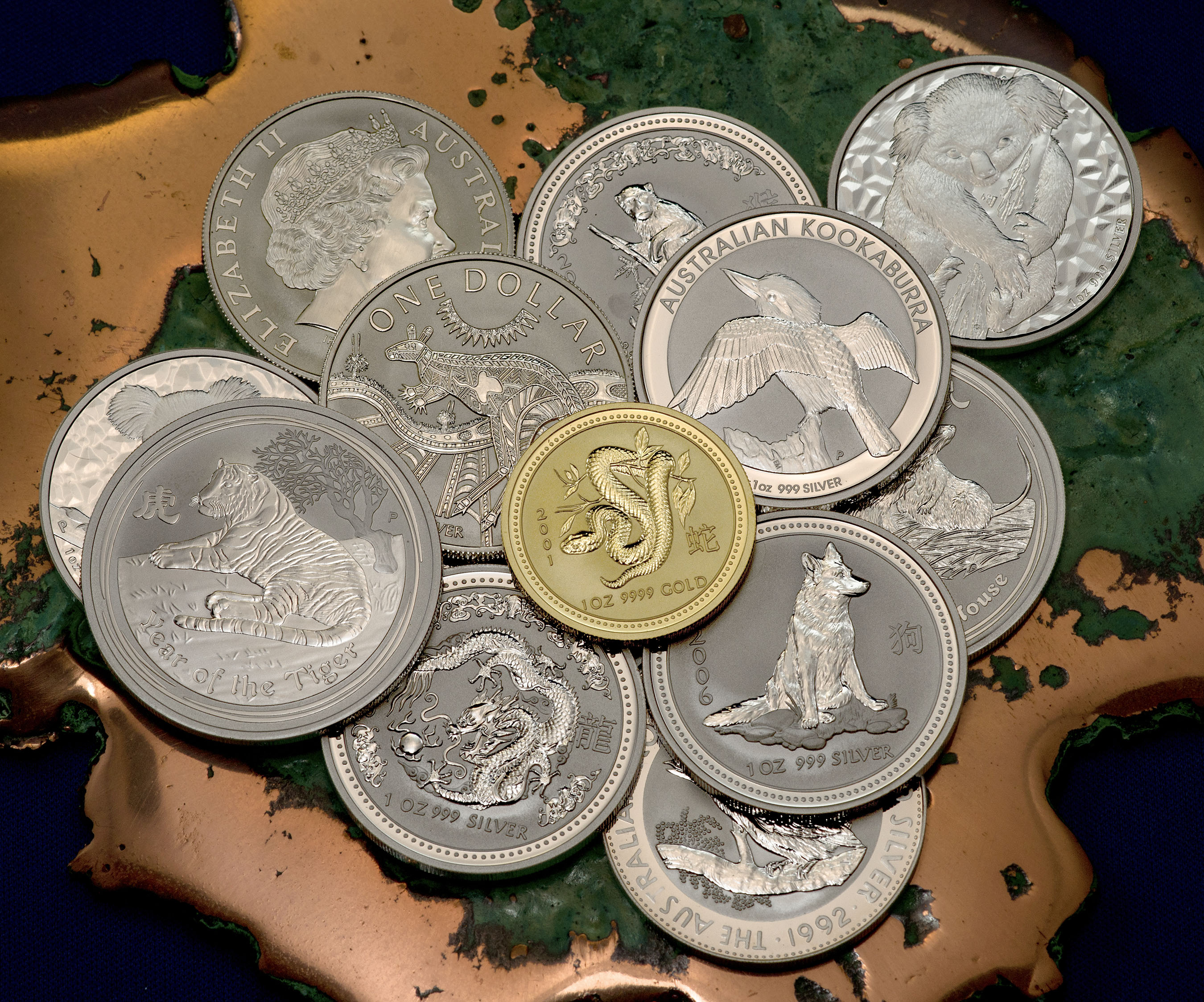
Picture by TomD BTW, part of a series I was commissioned to do for an Australian coin dealer.
Not trying to hijack your thread (he says while in the process of hijacking your thread) but I just added another part to a software suite that I have that unlocks some real and usable capabilities in synthesis with the other parts.
Below, I’ll attach a photo of my Grandmother and Father taken in 1924 +/- 1. I found it years ago in an old suitcase and have since made various and some fairly significant efforts at restoration. But the latest software, Topaz Gigapixel, made a 102 year old heavily degraded B&W portrait look like is just came out of a modern studio.
Since the original, I’ve run it through 2 other Topaz filters that function as a plug-in Photoshop. The programs will function as standalone programs too. The Topaz filters are Denoise AI, Sharpen AI and Gigapixel. Currently Topaz has gone to a subscription basis and they would want $200/month. The devil with that. If you hunt, you can buy them standalone for $30-$40 each and they plug into PS to function integrally.
I would describe the specific process but the result would remind me of when, while in engineering school, a professor had me stand up in class and demanded that I describe in detail my critical path analysis of a multi-hundred item sequence. The description did/could not make sense on an element by element verbal description, and was an obvious waste of everyone’s time.
I’ll attach the finished shot first, you can tell it was the 1924 equivalent of a studio portrait. Whenever I look at this shot, what pops (no pun intended) into my mind is a very short 20 years later, my Dad, as a West Point grad, was a Platoon Commander in the 101st Airborne was in a desperate and murderous fight with the Germans in Normandy. It’s hard to look at the little fat faced cherub and equate that immanent reality.


If it is unlikely that a born and bred New Yorker be attracted to Country music then what are the chances that this particular Deep Southerner would be addicted to Spanish Guitar?
And Vivaldi, especially oboe concertos?
And blues?
embed?
Below from Google AI in response to a search. You can see elements of prejudice in the framing of the intended traffic mitigation efforts in terms of “sprawl” and civil rights.
Did it ever come to light who was spearheadding the successful opposition by federal lawsuit to Atlanta metro traffic inittiaves circa 2002?
The prominent federal lawsuits that successfully disrupted and reshaped Atlanta metro traffic and highway initiatives circa 1999–2002 were spearheaded by a coalition of environmental and civil rights organizations, most notably led by the Sierra Club, Georgians for Transportation Alternatives (GTA), and the Southern Organizing Committee for Economic and Social Justice. [1, 2]
The primary public figures and legal minds anchoring this push included:
Context of the Legal Battle
The litigation (most notably Georgians for Transportation Alternatives v. Shackelford and Sierra Club v. Atlanta Regional Commission) alleged that Atlanta’s multi-billion dollar, highway-expanding Transportation Improvement Program (TIP) violated the federal Clean Air Act. Because metro Atlanta chronically failed to meet federal ground-level ozone and smog safety deadlines, the lawsuits successfully froze federal funding and forced a historic out-of-court settlement. [1, 2, 4]
The Outcome
Rather than stopping transit outright, the opposition successfully weaponized federal law to force a massive pivot away from sprawl. The settlement required state and regional planners to scrap dozens of major road-widening projects, reallocate roughly 40% of regional funding directly into mass transit, and heavily analyze the civil rights impact of traffic planning on low-income and minority neighborhoods. [1, 3]
My knowledge from both a personal and professional level indicate that the Georgia DOT is well funded, efficient and competent. Lord only knows the crisis level if that were not the case. Pure traffic density is the issue.
The density problem was significantly purposefully created by supposed “environmental” groups. The effects of the rapidly developing increasing traffic density has been easily extrapolated for decades. In the late 1990’s and early 2000’s a number of projects were proposed to head it off to a significant degree. But, each project was sued into non-existence in Federal court , one by one. Every suit was brought and financed by non-regional environmental groups ultimately financed by, nobody knows. The Sierra Club was the front group for several suits. Whatever the ultimate purpose of the suits was it did not include the well being of the citizens
The biggest hit was an outer perimeter to route non-local traffic, both E-W and N-S entirely bypassing metro Atlanta. I75, I85, & I20 all intersect in the middle of Atlanta constituting a large portion of the total. But noooo. Several other major projects were killed.
You would not believe the competency the GDOT call on to plan and execute MAJOR infrastructure projects. This bunch in FDOT District 3, not so much. They make what would be a 4-5 month project in Atlanta Metro last for literally years. And in the face of rapidly increasing traffic density, the local FDOT’s traffic light timing and coordination is absurdly bad.
I was “involved” with the industry for some time and before I retired couldn’t open my mouth publically.
Picture below: Ga 400 entering Buckhead area of the city on a Sunday morning. Buckhead was the area in the news a couple of years ago that tried to secede from Atlanta due to non-protection from the APD from the hoards of inner city predators.
<a data-flickr-embed=”true” href=”https://www.flickr.com/photos/tomd77/21935250858/in/datetaken/” title=”Into the belly of the beast”><img src=” ” width=”2048″ height=”1477″ alt=”Into the belly of the beast”/></a><script async src=”//embedr.flickr.com/assets/client-code.js” charset=”utf-8″></script>
Just happened to be near the Port of Pensacola yesterday and saw this.

This is a Gulf of USA (Mexico?, can’t get used to that) open water oil drill rig. It Is not a ship, it is built on a barge and towed to location. The drill rig has been in port for a few weeks for maintenance and repairs.
We have a years long history of getting some strange looking oil field boats in port for refit. If you look at the bow (left side of the image), you can see the helipad used to get workers on and off.
This rig can drill 35,000 feet deep. Hope the workers speak Chinese.
I’m definitely not a Naval Architect and I can’t fathom (to coin a phrase) how this can remain upright when loaded with the drill heads, pipe and whatever else is hanging on up there while in a 10′-15’+ sea.
I’ve long been an avid photographer and have, on a number of occasions, been paid for my work. My actual profession is (was) Civil Engineer and Project Management in the construction industry.
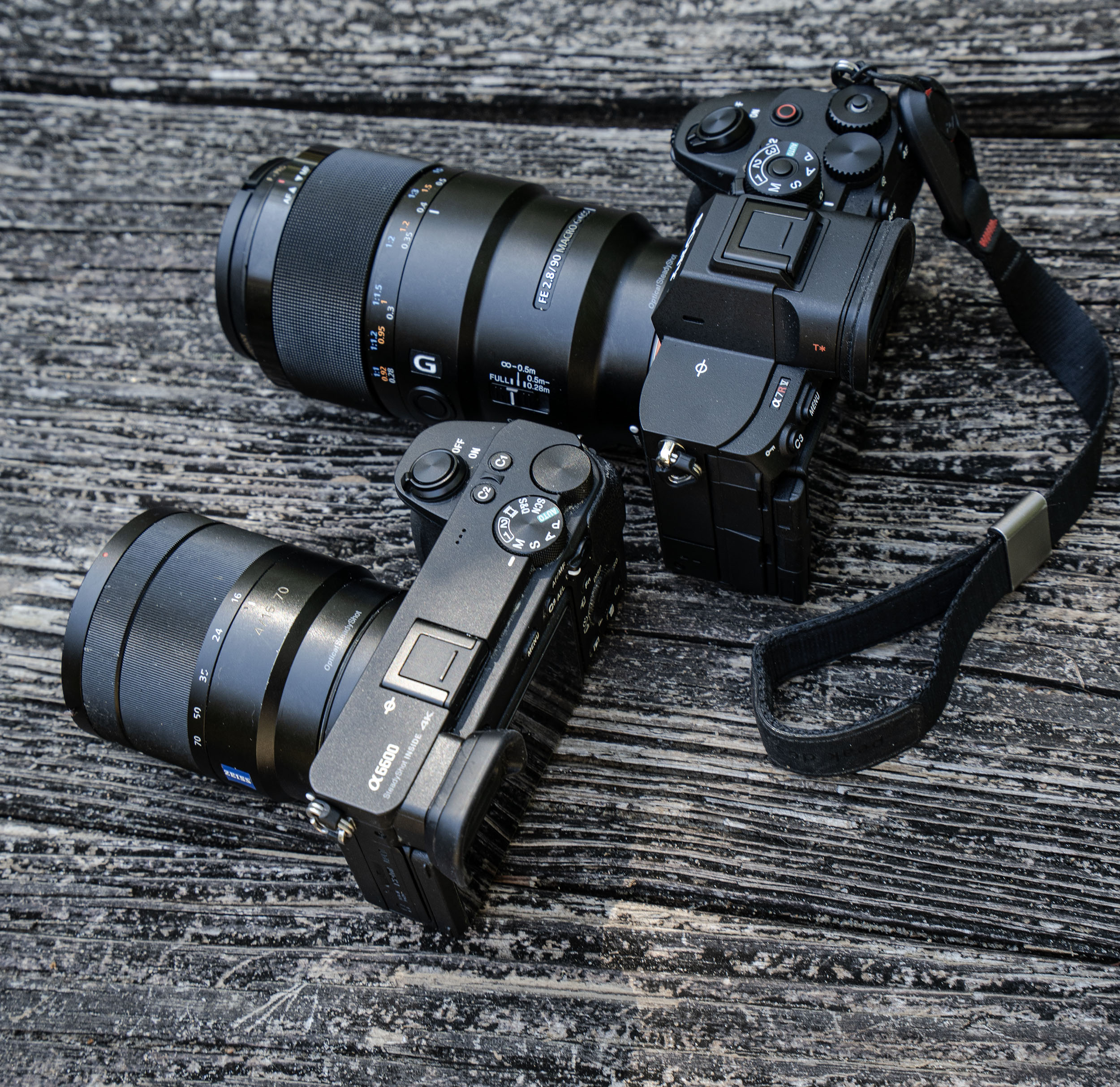
I have 2 cameras for different functions, a smaller, lighter and cheaper “carry around” camera to have with me for targets of opportunity and a larger, heavier and more expensive camera that I use for shoots and studio work. The specific cameras that I use have changed over the years but have followed that format. Currently, the small/light/less expensive roll is covered with a Sony A6600 which retails for in the $1600 range without lens though you could get a good used one for a little more than half that. The larger camera is currently a Sony A7RV, which are retailing in the $3300 range without lenses. Notice both are Sony. Because of the cost of the lenses which will only fit that brand camera, once you start with a brand (Sony, Nikon, Canon, Fuji, Fuji, etc.), you tend to stay with it. No way on earth am I gonna start over on a lens collection, which cumulatively over time can represent far more money than the bodies, if you’re a fanatic. Most normal people can buy one good multipurpose lens and live happily ever after.
I’ve notice that I shoot as many of my favorite shots with the A6600 as with the A7R5 and really haven’t noticed much in the way of quality differences between the two, so I decided to do a test. Shoot the same object with both cameras while eliminating or adjusting for as many of the variables as possible. Then taking the images to do a side by side to see the actual differences between the camera images.
Below is a picture of the two cameras side by side wearing typical lenses.
Here’s how I set it up:
All shots were taken from a tripod
I put the subject, an old Rollei camera on a wood tripod in my yard, in the shade.
The same lens was used on both, a 90mm f2.8 Sony branded macro.
ISO was set to 400. I should have set it to 100 but———
The shots were manual mode 5 sec timer to eliminate camera shake, f5.6, 1/100th sec
Focus was center
For technical reasons, the effective magnification of any given lens is different depending on the sensor size of the camera. To keep the included image the same, I had to move the tripod to equalize a 1:1.5 magnification difference. The shooting distance was 9’ for the A6600 and 6’ for the A7RV.
There were no post production modifications, the images were straight out of the camera as RAW files.
The original images are far too large (24 meg and 70 meg respectively) to put on the net so these images have been changed to jpegs at a more usable file size. But still with no modifications.
Results
The images are below, with the top being from the A6600 and the bottom the A7R5.
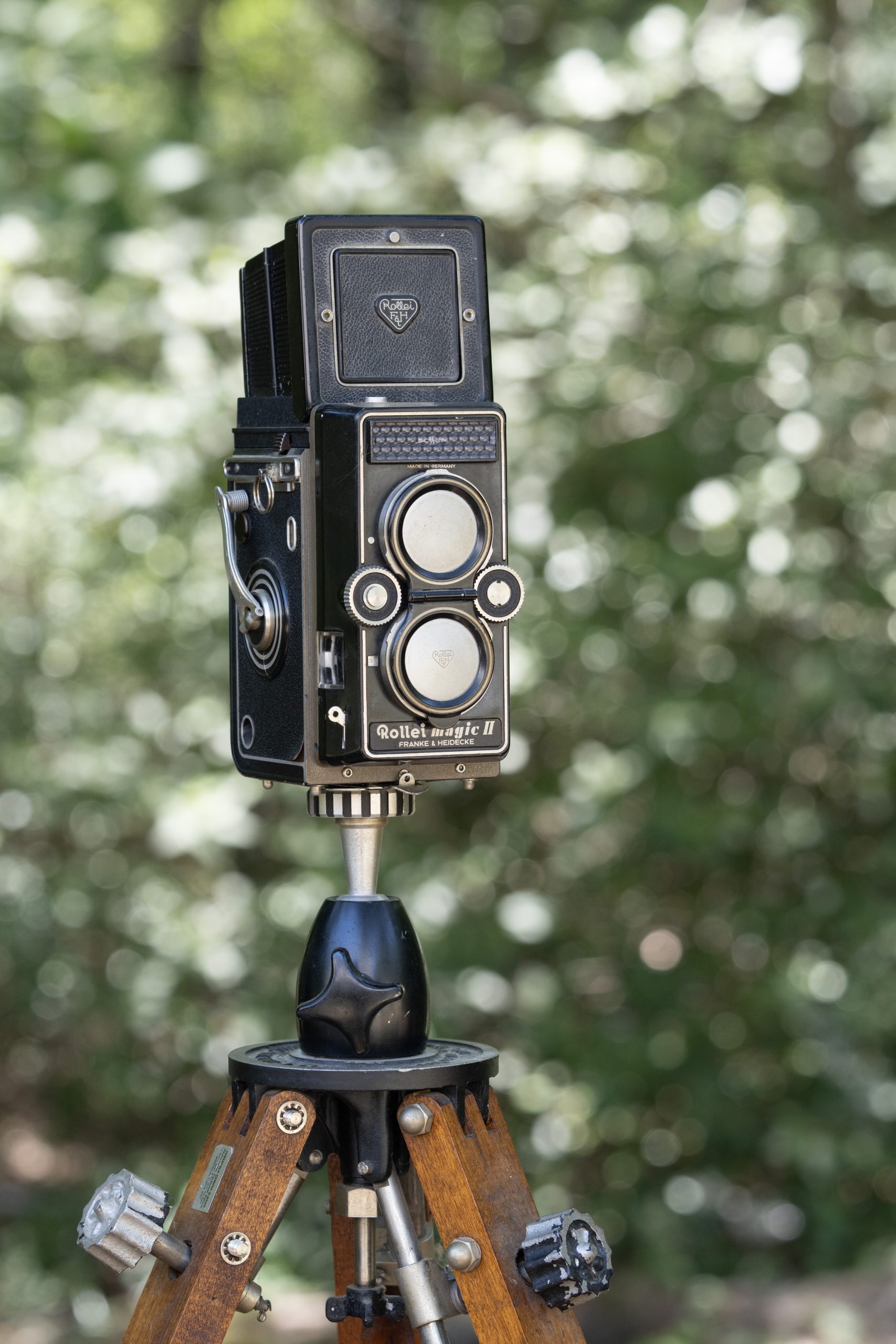
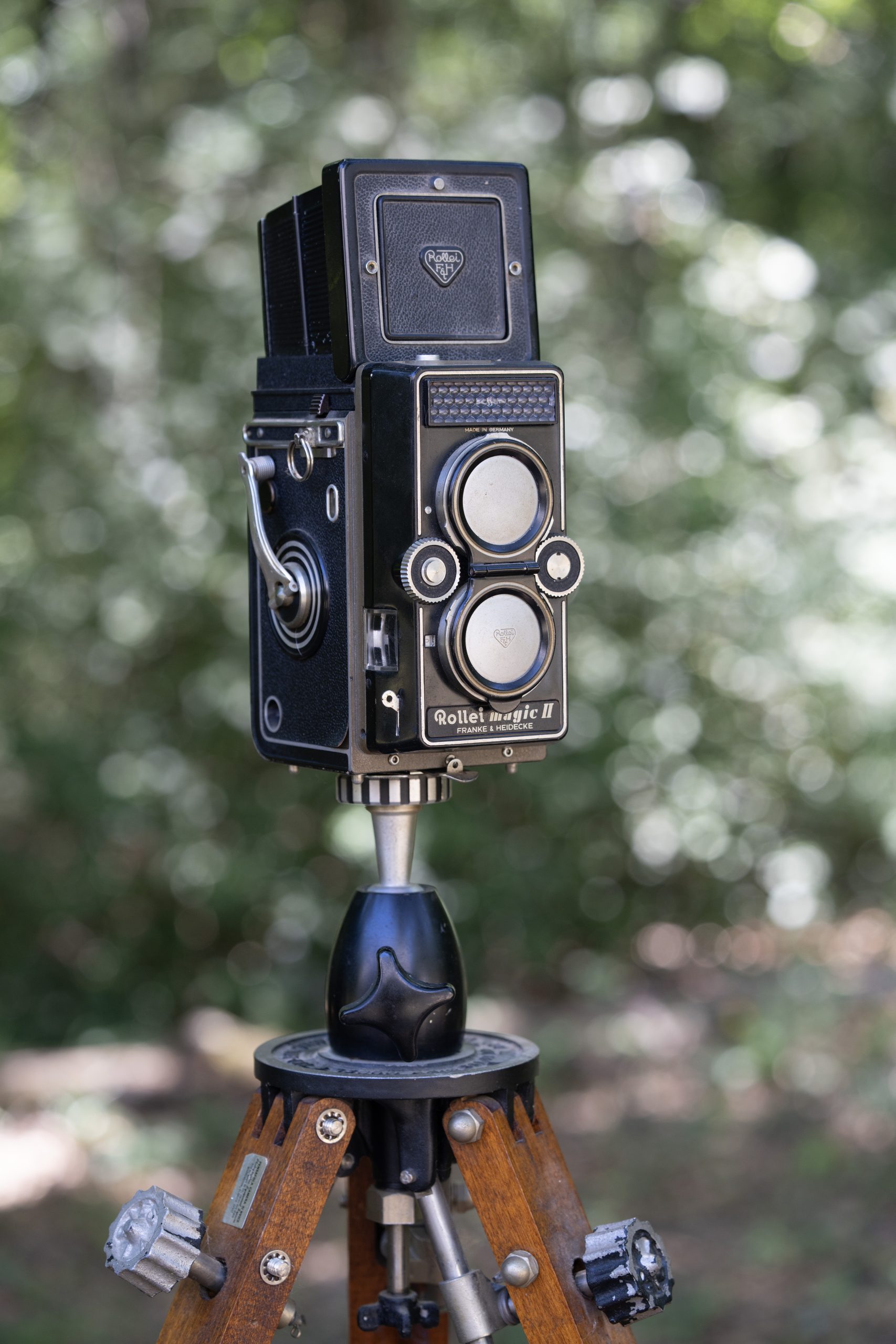
Looking at image quality, there is very little detectable difference. There is a slight difference in white balance and color saturation but I easily and commonly alter any of those attributes in a few seconds with Photoshop. The bokeh is slightly different mostly because ASP-C cameras all have a slightly greater depth of field than full frame. That’s due to optical physics, not camera quality. Usually, you have to shoot an ASP-C camera 1 stop lower to match full frame bokeh.
Looking at image resolution (sharpness), below is a side-by-side isolation of the camera face. Just above the top lens is printed “Made in Germany” in small (less than 1/16’’) print. In addition, there is the company logo on the bottom lens with the line thickness in the 1/100” range. If I was required to choose a clear winner, I would have to bore in to the point that the test would have no relevance to what most of us do. Astronomers, perhaps.
The image from the A6600 is on the left and A7Rv on the right
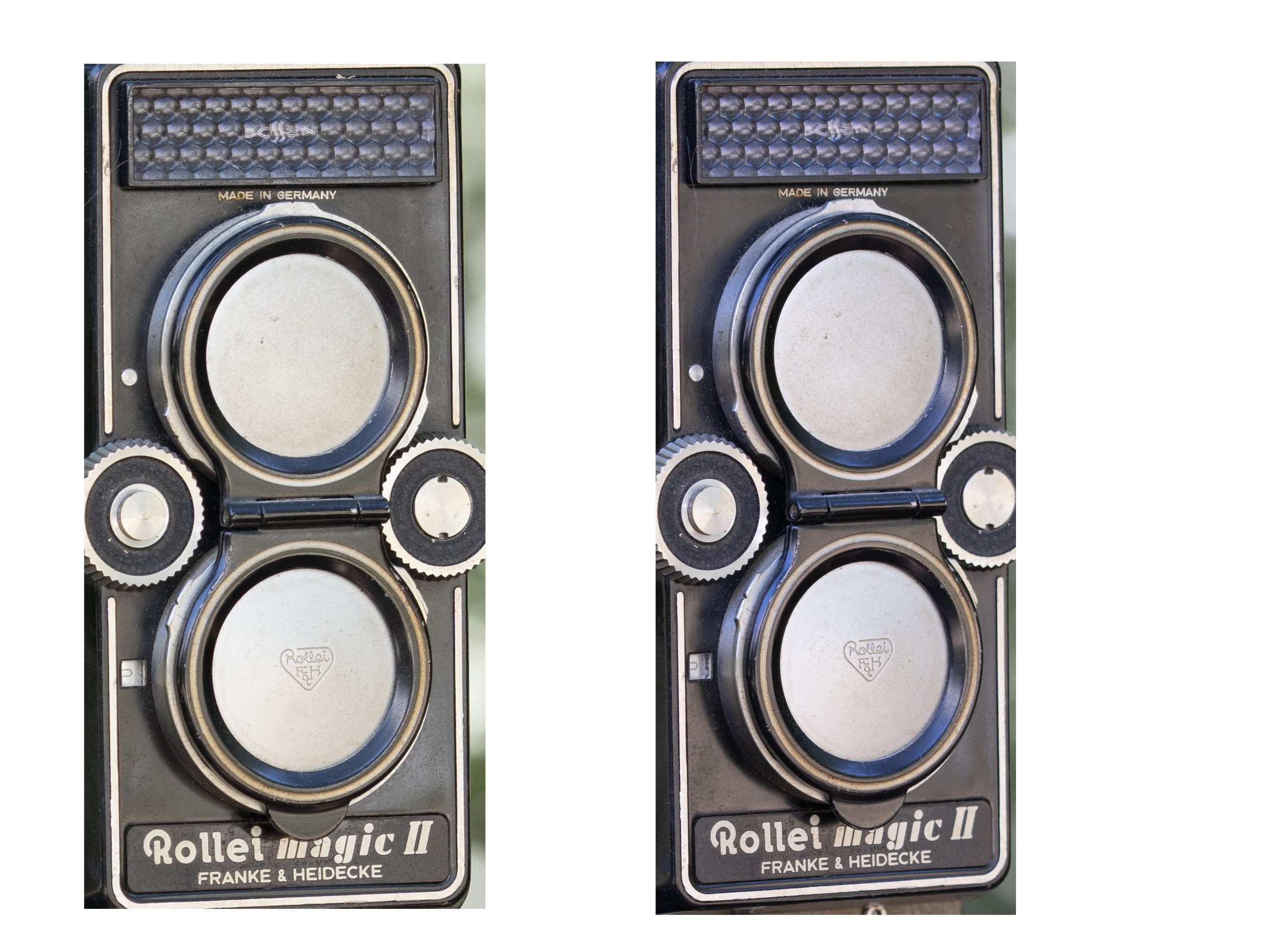
Conclusion:
I really don’t see any substantial differences in image quality I have no doubt that the differences are there but only at levels that would make it moot for the great majority of people. My self too, probably though some of my studio work pushes it hard enough that I’ll keep the full frame.
If you and a friend go on a shoot armed with one of these cameras, given close to equal skill levels, who ever has the best lens is going to get the best images.
Here’s a parallel: For a number of years in my native Atlanta, my profession commonly had me evaluating old abandoned buildings in the downtown area. I was usually by myself and there was almost always lots of evidence of “tenants”. I’m ex-Marine and life time competitive shooter in several different disciplines, so I commonly carried a weapon. When anyone asked my for my recommendation on the best carry pistol, I would reply, “The one you’re most likely to have with you.” That works in cameras too.
Given the marginal differences in image quality between the two formats coupled with the anything but marginal differences in camera weight, size, camera costs, lens cost, & camera portability, it’s hard not to conclude the ASP-C format is superior for 90% of the population. There are advantages to full frame, making large prints for example. A full frame camera will usually be better at low light, high ISO situations such as indoor sports, concerts, night time street photography, some wedding shots, etc. I’ve gotten some indoor shots at an ISO of 12,000 that look fine right out of the camera. An APS-C would be close (at least) to useless at that ISO.
This is based on Sony because that’s what I have but you can get equivalent models with equivalent performance at equivalent price from any of the major camera makers. I also recommend exploring the used markets. Skip Ebay though and look at major camera dealers like B&H or Adorama. Cameras these days are engineered to make it well past 100,000 snaps. An average photographer shoots, what, 1000/year?
Cell phones? Cell phones make decent snapshots but if you want a photograph— Also, cell phones do fairly well as long as the conditions are ideal but the images degrade rapidly otherwise. Then, there is no adjustability. Say, you’re shooting photos of mostly still subjects and everything is fine but later you want to shoot something moving, maybe rapidly. You’re SOL. Cell low light capability truly sucks.
Better a cell than nothing but if you aspire to more.
Below is a sample of one of my high rez product photos taken with a full frame. This is one of a series on Mexican coins taken for a online dealer.
TomD

I would think that the principle and purpose behind the concept of government was an outgrowth of earlier tribal organization. A chief by whatever name, usually the strongest, surrounded by his warriors and “wise” elders or something very similar was the precursor to organized government. The purpose wasn’t necessarily the aggrandizement of individuals but to protect the tribe members from predation from within and without of the tribal structure.
In dense blue run cities it seems that the basic purpose has been inverted to center on the increase of the wealth and power of a central elite and the public can be damned.
The only valid purpose of government should to provide a framework of protection from predators physical and economic, codify limits of behaviour and enforce same so the population can thrive without fear to whatever extent possible.
Seems to me that Brandon has flatly failed at his warrant and is flailing around blaming the ramifications of his failure on whoever seems to be semi-plausable while the predators swarm and prosper. Essentially chaos.
Multiply that by a large enough factor and it is civilizational failure.
