One Month In

So today was the last day of my marketer’s book launch service.  And as of now we sold sixty books.  Thirty-four were e-books and twenty-six were paperbacks.  And today I noticed that one sale (an e-book) was sold in Germany.  Well, well.

Owing to the fact that book sales have not topped one million copies, as of yet, I’ve decided to turn the whole thing into a network marketing exercise.  I intend to find ten people and have each of them buy ten copies and then each force ten people to each buy ten copies and then so on and so forth until by level ten we have ten billion copies sold!  By the way that math may be off a little but you get the idea.  After all if it worked for Amway and Communism how can it possibly fail?  Why didn’t I think of this earlier?  All I have to do is buy a white board and some dry erase products and maybe combine this with a Tupperware item or two and before you know it I’ll be a huge success.

All in all, it’s been very educational.  I guess the takeaway is that price-point and ads on Amazon are what sell books.  As soon as I dropped the price of the e-book from $5.99 to $2.99 there was an immediate surge in sales.  Since I have very few reviews, I’ve decided to drop the price of the e-book to $0.99 and try to get a bunch of sales right away in the hopes that it will generate some reviews.  Of course, that’s just my idea but it seems to make sense to me.

The marketer has additional services to extend the launch but I’ve decided to try it myself.  Now that I’m running the campaign on my own, I’ll depend on Amazon’s automatic key word selection to attract the attention of the techno-thriller/vigilante justice readers out there.  It should be very interesting to see how this change affects sales.

I will say that becoming a “best selling author” is harder than I imagined.  I assumed that with my incredible writing skills the publishers and the reading public would beat a path to my door and shower me with riches.  So far, no path.  So far, more like a trickle of riches.  But I am undismayed.  My acquaintances who’ve read the book report enjoying it a lot.  Now of course they may be just saying nice things because they like me.  But I will say it is very nice to receive accolades even from friends.  If instead they had told me, it was awful I think I’d be pretty discouraged.  So currently I’m buoyed by the minor success I’ve enjoyed and hopeful that with further exposure the book will find an audience (possibly in Germany!).

So, let’s just see how the next stage in this odyssey goes.  As always feel free to add a review to Amazon and hopefully the word will get out that a new classic has appeared on the horizon for discerning readers.

Theories of Story Structure

I was watching a video about the correct way to structure a story.  And the guy had eight or ten different versions that people have formulated over the years.  And they go from a three-act model to a (I kid you not) twenty-seven stage version.  The latter is based on the hero’s quest model that Joseph Campbell formulated based on what he observed in various western myths and legends.

From what I could tell, more is better.  He had the three-act version down as the worst version.  Now he did qualify that it was probably a good model for a movie or a short story but for a novel it was too slight.  For the most part they all seemed to be variations on a theme.  Basically, you have a series of setbacks and victories leading up to a climax and then a conclusion.

I guess that’s probably more or less what a story is.  And there were some good ideas for what some of these setbacks should look like.  In particular, the hero’s quest had a bunch of stages that seemed to echo many of the incidents in such classic adventure stories as “The Lord of the Rings.”  There’s the initial refusal to accept the quest, there’s a temptation at a low point to renounce the struggle.  We have a scene where a minor character saves the day.  We might have a mentor helping the hero mature into his role.  Maybe there’s a betrayal.  Etcetera, etcetera.

In his defense the video guy did say that a good writer wouldn’t have to follow any of these models slavishly.  Like a good cook he can use his own judgement and add and subtract things from this recipe according to personal taste.  And I think that’s the point.  Really there is no perfect recipe.  Every story should be different.  If it’s not, why would anyone want to read the second one?  Why would someone want to write a second story that’s exactly the same as the first one?  That’s a rhetorical question.  The obvious answer is that if people liked it the first time, many of them will want more of the same.  So, the answer is money.  But I hope that anyone who is writing a series can plot out the events for the saga with enough intelligence to make the story varied and interesting and not repeat all the same events with only small variations.

I will confess that when I was getting close to the end of my book, I was tempted to make the story quite a bit longer.  I thought the ending was a bit abrupt and there wasn’t a more gradual slope to the end of the story.  But the more I thought about it the less I liked the idea of dragging it out.  My character had gone to war for revenge.  When that was done his part of the history was effectively over.  What came afterward would be another story and I still haven’t decided what the next thread I want to pull on in my make-believe world should be.  So hopefully I’ll have the sense to read Joseph Campbell’s book and then do the opposite!

Guest Contributor – Tregonsee – 23JAN2026 – Often Unreliable

I think the fondness for first person (often unreliable) or third person limited viewpoint comes from a fundamental aspect of modernist philosophy. That aspect is that in modernist thought there is NO absolute truth. There’s my truth and your truth and (heaven help us) Kamala Harris’s truth. The Omniscient narrator belies this point, for that story, their narrative is the truth. They deny that such can exist in support of their raging relativism. I think the second issue is the types of “stories” they write. Plot is limited or irrelevant, the characters aren’t characters but more archetypes or mouthpieces for their viewpoints. They view the whole purpose of literature to essentially be propaganda. The more traditional is that we are telling a story. There is probably meaning there but in general rarely is allegory the prime purpose. Not to say this doesn’t happen, e.g. Starship Troopers is a polemic on Duty, but honestly, it is also a hell of a good story. Thirdly, the modern literature folks are oddly like what the Puritans were alleged to be. They’re afraid someone might be having fun somewhere and they must prevent that at all costs.


You Were Always a Good Friend to Me

As all who have followed my website know I’m a connoisseur of the various film versions of Dicken’s “A Christmas Carol.”  And I’ve opined before that the premiere version of the Ghost of Jacob Marley is Frank Finlay’s portrayal in the 1984 version with George C Scott as Scrooge.

Here is the whole scene:

Now, why do I say it’s best?  Technical presentation?  Acting ability?  Faithfulness to the book?  Emotional impact?  Actually, all of the above.  In all aspects of the scene this version is head and shoulders above all the rest.

The makeup on the ghost is wonderful as are his costume and the pattern and details of his fetters.  Even his eyes appear to be those of a dead man.  Finlay’s reading of the lines is masterful and the emotions he provides are wonderfully potent.  And the lines selected are the best selection from any of the versions out there.  And the climax of his performance is his outrage when Scrooge tells him, “But you were always a good man of business, Jacob.”

Marley howls, “Business!” Mankind was my business. The common welfare was my business; charity, mercy, forbearance, and benevolence, were, all, my business. The dealings of my trade were but a drop of water in the comprehensive ocean of my business!

This one speech is easily seen as the reason for the whole story.  We see the partners face to face and we see what Scrooge cannot.  Marley was what Scrooge is; a terrible human being who cared not at all for his fellow creatures, their pain and suffering.  But death and judgement have taught him the error of his ways and in his shame and penitence he wants to save his old partner from himself.

And because he was as Scrooge is, he selects the instruments that have the best chance of reaching into Scrooge’s heart and mind and shaking him out of his evil habits and awaken in him the knowledge that the most precious treasure on this Earth is the chance to use our time to comfort those around us and recognize the kinship we all should have.

So those are the main points.  But even small bits contribute to this “Marley.”  When the ghost appears Scrooge demands to know what it wants of him.  Untying the funeral kerchief from around his head, his bottom jaw drops wide open with a loud clicking noise to indicate that he is a corpse.  Only once his mouth is unbound can he answer. “Much!”

So, yes.  This is the best Marley.  And George C Scott provides a fitting foil for Marley’s mission.  He is suitably impenitent and uninterested in Marley’s gift of potential reclamation.  When told of the three separate spiritual visits he asks Marley if they could all come at once and save time.  All in all, he is completely undeserving of Marley’s gift.  But as we shall see the scope of the gift that Marley procured manages to finally break through Scrooge’s shell of callousness.

Well done Jacob Marley.

So Now I’ve Got a Publication Date

Update:

The Book Detail Page went live on Amazon:

Amazon book page

Wohoo!

I started loading the files for the e-book and paperback on Amazon.  The release date will be 21JAN2026.  I’m doing a last review of the text to find typos and “literary infelicities” before I hit the button and make the pre-release page live.

I’m setting up a page on the site (link directly below) for the marketer to direct traffic here.

Coming 21JAN2026 – The Sniper by Jake Barter

I have to admit I’m more excited about this than I thought I would be.  I’m especially looking forward to getting the paperback proof copy.  I’ll put it on the shelf of my bookcase in the living room between my copies of The Iliad and The Odyssey.  After all Homer has only produced two books in the last three thousand years and I wrote one in less than a decade!

I think today is the first time i started thinking about the next book in the series.  Bogey’s had his work.  I’ll let him off the hook and let Connors recruit some new folks to wrestle with the political chaos that has enveloped America after the events in “The Sniper.”  For this one i’ll have to map out a series of events.  I can’t just wing it.  Maybe I’ll do a “future history” timeline like Heinlein did for his alternate history stories.

I think in these later stories I might like to have a moon base.  It’s definitely not an unbelievable technological stretch and it would give the stories a less claustrophobic feel.  Mars just seems too difficult and with a fractured America I doubt the resources could be imagined available for something as challenging.

But that’s just a spit-balling thought.  I’m going to have to do some serious thinking before I just jump into it.  It’ll have to feel right.  And then I’ll have to come up some new characters.  I think I want some technical types in this story.  And I’ll have to think of what is going to happen to poor President George Chastain.  I’ll left him holding the bag with a bunch of states in basically open revolt.  He inherited this mess and he has my sympathy but I’m afraid it’s not going to get easier in the next book.

And in the next book I might try my hand at my first love story.  I’ve left Paul Connors and Grace Boghadair sort of up in the air.  With bogey out of the limelight maybe it’s time to see whether those two have a future.  Well, I’m no romance novelist but maybe I can come up with a believable plot to get those two together.  After all she is a widow looking for a husband and you can’t find a more eligible bachelor than the richest man in the world.

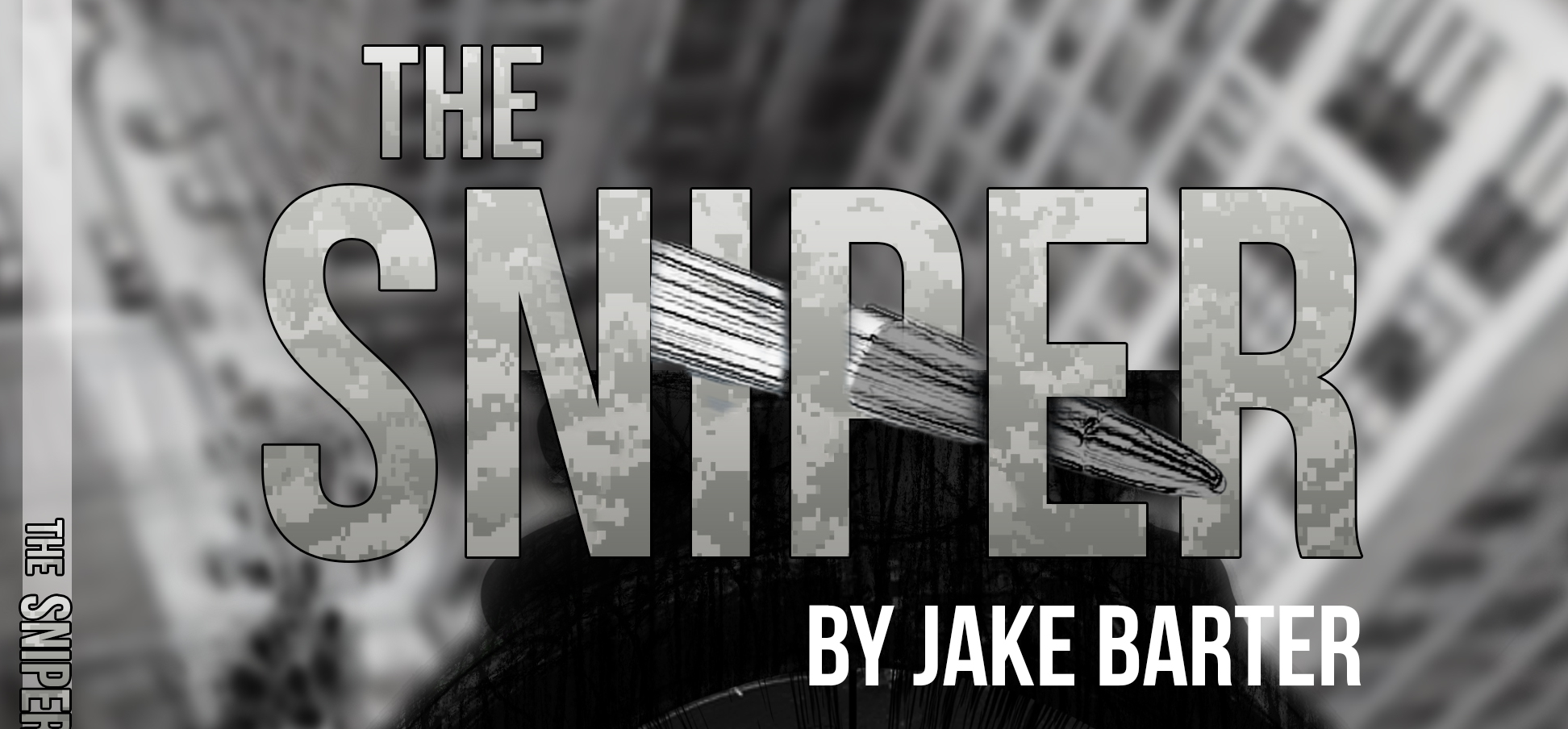
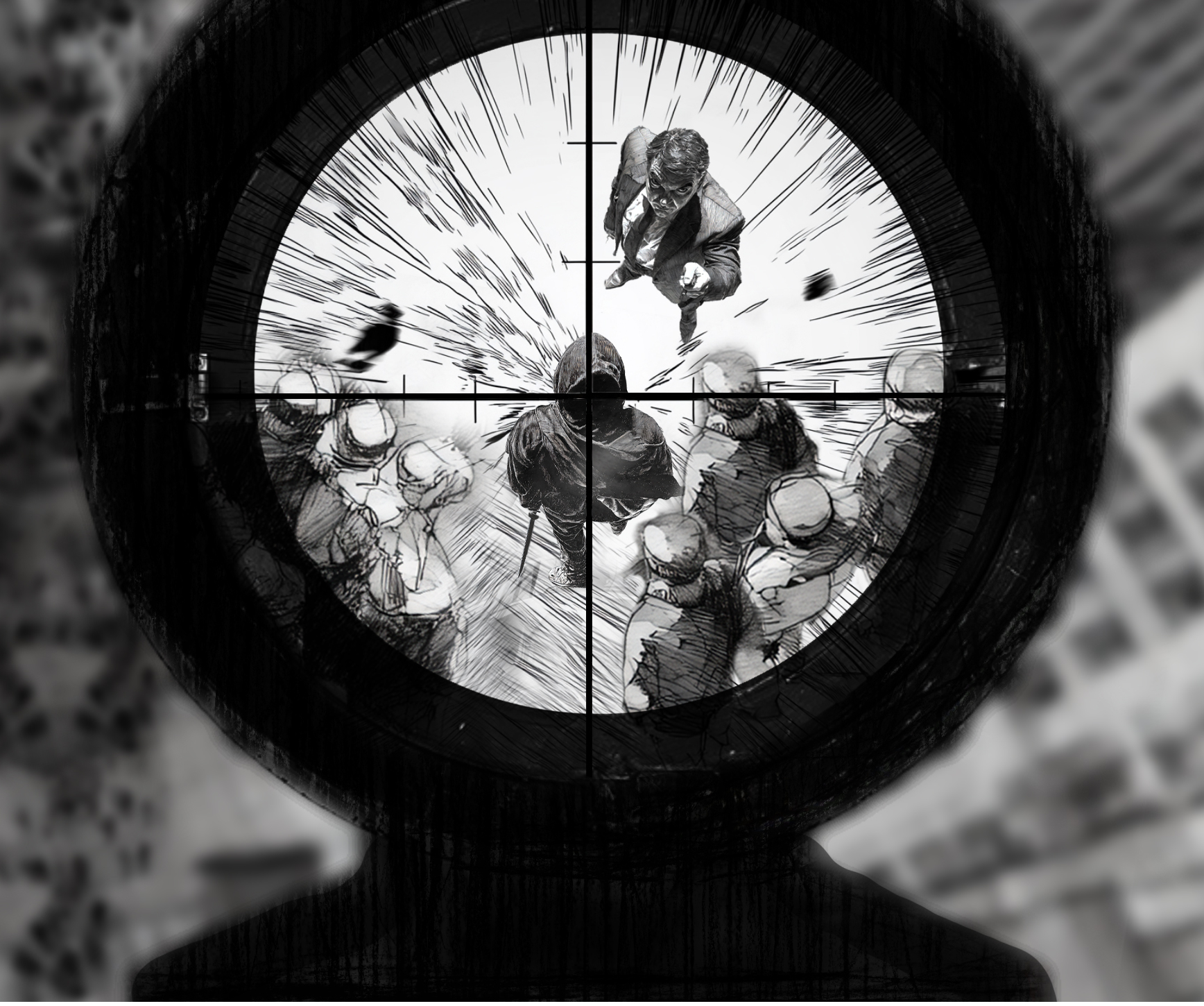
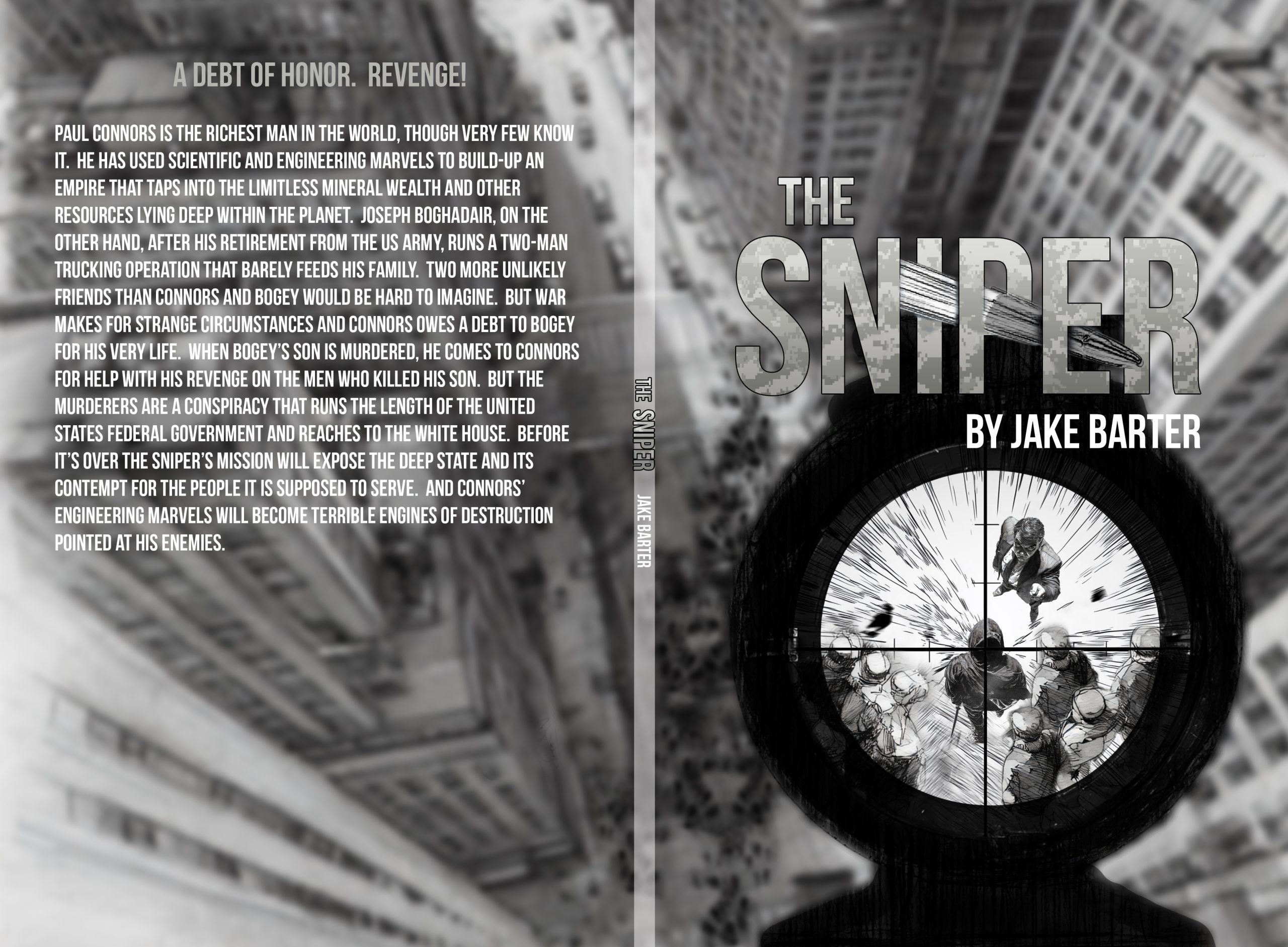
Well, I’ll attach the links to the Amazon pages for the books and the author (Jake Barter!) as soon as they’re live.  Meantime here are my cover shots.

Guest Contributor – Tregonsee – 11DEC2025 – Great Science Fiction Redux

I think the only way to answer this is to look at some stories that have held my attention. I’m going to look at each in 4 particulars Plot, Characters, and Science, why it holds my attention. These are of course my own (potentially assinine opinions) and I apologize in advance if you find your ox has been gored

I Robot by Isaac Asimov
Plot: This doesn’t really have an overall plot per se, but one in each story. This is unsurprising as it a bunch of shorts tied together. Each story is itself is essentially a mystery and I find their resolutions in general quite Satisfactory (but the final story that I have never enjoyed)
Character: Honestly the human characters are cardboard. Susan Calvin feels like a classic scientist character in drag. Donovan and Powell who show up in several are more foils for the story line. The real characters here are the robots like Robbie and figuring them out is the whole point of each story.
Science: The Robot positronic brains are sheer handwavium. Some of the resolutions do involve some actual science. That said the positronic brains are VERY self consistent and that adds to a feeling of reality.
Why I Like It: the pleasure of it really comes from how the puzzles are solved. These are almost more Mystery than SciFi at some level

A Canticle for Liebowitz by Walter L Miller
Plot: There are essentially 3 sections spread out over a period of several thousand years. Each section has an internal plot. All three sections ultimately lead to the final resolution of the plot
Character: Each section has one main character. These are well rounded (though ALL male as they are Monks or abbots of the Monastery for St. Liebowitz). Given their time scale they exist ONLY in their section, although their actions (and to some degree personalities) affect the later sections of the story
Science: This is a post nuclear war book. The effects of the radiation are wrong, though they would not necessarily have been thought unreasonable when these stories were written in the 1950s. Other science (as society recovers) makes sense though is not directly influencing the plot
Why I Like It: The story arcs are fascinating with the overall arch being rather disturbing. Mr. Millers prose is downright luminous in places and his plotting and bits of humor (winking at everyday things we understand but the characters don’t) helps offset the sombre tone of the overall arch of the story. Even though this is three separate stories the work to tie them together is elegant. This well deserved the 1961 Hugo when the Hugo meant something

To Say Nothing of the Dog by Connie Willis
Plot: This is a time travel story where an apparent time paradox must be resolved or history as we know it may just disappear. It is also a closed room Mystery AND a bit of a romance all at once with most of the action occurring in the late Victorian Age. And it successfully wraps up ALL these pieces and (mostly) sets the time stream back to its proper state. This is a tour de force of plotting
Character: Our two main characters (Ned Henry and Verity Kindle) are very well fleshed out. The secondary players also have decent motivations though are though sometimes intentional stereotypes (e.g. a totally distractible Oxford Don)
Science: It has time travel, which in all honesty, appears to be more in the realm of fantasy than SciFI (even though it has been a staple since H.G. Wells The Time Machine). That said the rest of its science mostly makes sense, and other than one critical biology issuethe science is not critical to the plot. The time travel is self consistent (although we are in the process of learning about it in detail) but we don’t get David Weber like info dumps but learn the about the Time travel as we go along.
Why I Like It: This is just an absolute romp. You are swept along by the mystery and by trying to resolve the change in the time stream that is introduced. As I said the plotting is genius level, the mystery is very like a good Poirot story. There are little details you may miss in the first reading that on second reading you wonder how you missed it. Again a worthy Hugo award winner

That’s probably more than anyone wants to read. Looking at it (and other stories I return to time and again) I am mostly attracted by good plotting. I admire additional character work and language. I am willing to suspend disbelief if the “science” is self consistent. I will tolerate massive violations of reality such as time travel, matter transports (looking at YOU Star Trek) and other massive violations of basic science. I’d love to see other people look at their favorites in a similar light

A Great Science Fiction Story?

Lately I’ve been thinking about this topic.  What makes a great science fiction story?  Can it be a great science fiction story if the story’s not great?  How about if the science isn’t great?  I think you know what I’m saying.  A great story, meaning great fiction, has characters drawn in a way that makes them compelling.  It doesn’t have to be Shakespeare but it can’t be two-dimensional cut-outs that wouldn’t make it through a toothpaste commercial.  And by the same token, what if the science is just stupid?  Sure, you can just say it’s fantasy instead and then the sky’s the limit.  But let’s stick to science fiction.

When I was a kid, I would have said that “great” science fiction needed the science but the fiction was not that important.  If there were enough star cruisers and anti-matter bombs and giant amoebas then all was right with the world.  In fact, the fewer human relations involved in the story, the better.  I was much more interested in the non-human characters acting “realistic” than any dialog between humans.  And the male/female dynamic was completely off the table.  The last thing a Lensman needed before, during or after a battle was a woman getting in the way.

Suffice it to say that time changes things.  I look at some of the “classics” of the golden age and I see a flatness to the story.  Now, this isn’t an all-encompassing criticism.  There are plenty of stories from the day that have nuanced characters and plots that reflect actual human personality types.  So, it’s not black and white.

Now, the modern literary science fiction has been described as having the opposite problem.  It’s all about human feelings and relations.  What isn’t as important is the “science.”  When that’s the case I will just declare that if a story doesn’t have any science at all then it isn’t a great science fiction story because it isn’t science fiction.  Period.

And without a doubt if a story has an exciting plot and memorable characters and also a clever science fiction premise then without a doubt it’s great science fiction.

So that leaves the other extreme.  What if a story is built on incredibly imaginative science fiction plot devices but the characters are cardboard cut-outs of human beings?  Can that be a great science fiction story?  In this category the works of Arthur C Clarke comes to mind and specifically 2001: A Space Odyssey.  Here is an epic tale stretching all the way from the dawn of Man to the first human interstellar voyage.  And yet the most human character in the book is HAL9000; a schizophrenic homicidal computer.  Now, is it an interesting story?  Well, yeah.  There are cave men and monoliths and moon bases and worm holes.  But honestly, do you find yourself rooting for anyone?  There’s just something so inhumanly stolid and wooden about everyone in the story that I feel that each one being murdered by HAL might be his happiest moment.  At least liveliest.

But anyway, I want to pose this as a question.  Can a technically engrossing sf story be considered great if the characters are ciphers?  What do you think?

Short Fiction Collected

I have an old beat up collection of Ray Bradbury’s short fiction.  It’s called “The Stories of Ray Bradbury.”  It was published in 1980 and contains about a hundred of his stories.  These stories appeared earlier in a number of short story collections that came out over the years that Bradbury was writing.  And he also wrote after this collection came out so there’s nothing original or definitive about this collection but it contains most of the short stories that his reputation was based on.  And because it is such a large selection (almost nine hundred pages in a 9.5 X 6.5 hardcover volume), there are great stories and poor ones.  There is fantasy, horror, something like science fiction and even nondescript fiction.  And because it was written over the course of about forty years it changes.  The emphasis, the stylistic touches, the topics all change.  But the voice is always recognizably Bradbury.  For the most part he is interested in the people.  The science is not the story.  In fact, most of the time it’s just the excuse for poking and prodding the people and watching them react.  It’s a pleasure to walk through this old volume and relive old stories and find out how I’ve changed over the years.  Have my preferences changed?  Yes.  But my likes and dislikes have mostly remained the same.  Possibly I’m a little bit more sensitive to the quality of the prose rather than the surprise in the ending.

It’s interesting to consider that science fiction short stories have been declared a dead field.  No one buys the stories either in book collections or in magazines (paper or electronic).  And that strikes me as a sad situation.  So many of these short stories contain wonderful ideas and characters and images that stir the imagination.  But somehow, they no longer have any value in the present world.  Can that be the permanent state of literature?  I guess it could be.  Capitalism is ruled by the law of supply and demand.  So, there’s no demand for short stories.

Well, that’s too bad.  Maybe the future will include a manner for artists to exhibit their works for people similar to how musicians currently perform concerts.  A live presentation where the audience listens to the story or watches a video presentation of it in a format that can’t be pirated and therefore has value as a single use experience.  All that’s left is the memory of the story.  Of course, that’s what movies were but now they’ve also lost their value.  So maybe not.  But I find a book of short stories to be a treasure trove.  A hundred stories and maybe fifty are very good and ten are wonderful.  That’s a pretty impressive collection.  I think any prolific author would be satisfied with that track record.

One thing that Bradbury liked to do was string together some of his short stories into a larger framework.  He did this with turning his Green Town stories into “Dandelion Wine” and his dark carnival stories into “Something Wicked This Way Comes.”  And what that shows me is these short stories can be the seeds for longer fiction.  But if no one reads them and rates them how will these seeds ever sprout.  Oh well.

Well, Spin the Wheel

If a brutally long and tedious day starts and ends with good news, does that make it a good day? I would have to say yes. This morning started with the book cover for “The Sniper” arriving. And after returning from a long, grueling day trapped in the bowels of a drab New England city, bored almost to desperation, I finally have a deadline for the launch of my book. It will be out sometime between the middle and end of January. Now granted, that can be as much as two months from now but just putting a stake in the ground is what I need to coordinate the whole crazy flying circus of an effort. Covers and EPUB files and pdfs and key words and discount deals and reviews and project pages and pseudonyms and email lists and Amazon ads and heaven knows what else. Yes, a day that starts and ends well is a good day.
I was pleasantly surprised at just how accurately the cover art portrayed the scenario and the mood of the story. And the quality of the drawing exceeded my expectations completely. I’m extremely glad I went in the direction I did instead of a more generic cover. If for no one else than for myself. It makes the book real.


Now I have to confess that I have no idea whether what I’m trying to do makes any sense. Can a book from an unknown author with an extremely niche audience break out and find a generously sized audience? My rational engineering side says the odds against it are long. I’ll say one in a thousand.
But at the same time, a part of me is anxious to take the plunge. And that is exactly what I’m doing. It’s a roulette wheel spin with a big pot of my money plunked down on double zero. What could be more fun than that? Well, I guess winning would be more fun. But that’s well beyond my power to ensure. I’ll have to let fate have her say.
I guess now I know how every author since Homer has felt when his creation is about to be unveiled. And I’ll say it’s a good feeling. As Kipling said:
“When ’Omer smote ’is bloomin’ lyre,
He’d ’eard men sing by land an’ sea;
An’ what he thought ’e might require,
’E went an’ took — the same as me!”
Every teller of tales is part of the long tradition. You make up something in your head and you want to see if the audience resonates to the same vibration you felt. But the worst fate would not be if a lot of people didn’t like it. The worst is if no one ever hears it.
Achilles in the Iliad wanted to die for glory, for immortal fame. Well, I’d prefer to live but I’d forego any profit if I could guarantee that a million people read my story. That would be a form of immortality. Well, spin the wheel.