“It has been said that history repeats itself. This is perhaps not quite correct; it merely rhymes.”
Theodor Reik
When I think about what is going on in the world, I have to wonder whether the nonsense that we see all around us can go on forever. Now it goes without saying that human folly is a tapestry that envelops all of us in a pattern that generates pain, fear, violence and death at a prodigious rate. And that there has never been a full century in history when the majority of human beings lived in peace and happiness.
And this isn’t anything surprising. This is just what human beings do. We’ve always lived in a state of wary hostility even when we were nothing but small family groups living around a campfire to keep the cave bears and sabretooth tigers at bay. We’re not peaceful creatures. We may live now in enormous groupings measured in the millions and even billions of individuals but at all times and in all places, we seem to end up at each other’s throats. But, does this have to be? Could it be possible for humans to organize themselves into groups that interact in ways that lead to long term and abiding cohesion and satisfying cooperation?
The track record for utopian communities is definitely poor. Some of the religious groups have thrived and shown some ability to cooperate in many community endeavors but this is a small minority of the human race. And even they can’t completely eliminate anti-social behavior. Currently, communities that live in affluent areas and support a robust police presence and a conservative judicial philosophy seem to do the best at creating a workable human environment. But as we’ve seen since 2020 the forces of chaos can unleash barbarism even in the most affluent areas of the country.
But what if technology can provide a system to guarantee both social cohesion and material security? We’re seeing the dystopic version of this in the Chinese system of social control called the “Social Credit System.” Here those who don’t follow the rules are blacklisted and denied access to various important social advantages like good schools and better neighborhoods. But think of the opposite. Imagine a multitude of organizations that figure out ways to find compatible people and build social systems that bind them together and allow them to thrive. I imagine these as completely voluntary associations. And if someone doesn’t work out, they get the equity that they put into the system and are assisted to find another association where they would fit better. But such an ejection would be considered a failure by the organization, which would use the most advanced research to analyze personalities before candidates are accepted into the association.
In the next installment I’ll discuss what facets of life would and wouldn’t be included in these organizations. And I’ll talk about what I think are the human realities that make something like this extremely difficult to pull off outside of a science fiction story.
Tuesday morning, I have a telecom with a book editor. My marketer provided me with the name and I’m going into this with absolutely no expectations and only slightly more understanding of the services.
As is now my habit I went to Grok and asked it. “What are the various types of editing that a fiction author might contract for his book.”
And the LLM responded in part:
“Below is a breakdown of the main types of professional editing that fiction authors typically contract for, listed in the usual order they occur during the publishing process. Each level assumes the previous one(s) have been completed.
Now, this is a lot of stuff. And if you add it all up for even a short 65,000-word novel (like mine), it’s at least, several thousand dollars.”
That’s a lotta dough.
So, my intent is to listen and take notes and see just how much in the way of editing I want and/or can afford. I intend to be open about my lack of a trust fund and my unwavering faith in my literary muse. So that should eliminate the developmental editing and line editing functions from the discussion. And honestly, even if I had endless cash to spend, I think I want the words and ideas to be my own and in the voices that I’ve invented.
As far as copyediting and proofreading, I guess I’ll decide whether the benefits justify the costs. After all, I can spell pretty well and for the most part spellcheck does tell me what bothers it. And I did do a pass through the manuscript myself already so I think it would have to be a reasonable fee to win me over.
But regardless of all my reservations I find it stimulating to go through these processes in publishing a book. After all, I’ve been reading professionally published books all my life and I’ve never seriously considered what value was added by the editor. I mean, if the author had terrible spelling and didn’t pay attention to normal grammar and orthography maybe that would have bothered me as a reader. But I’m guessing that the golden age sf writers were all pretty reasonably literate and capable of providing a clean manuscript.
But now I’ll speak to someone who does this for a living and maybe I’ll get a perspective I didn’t consider. Well, we’ll see. Maybe I’ll decide to buy some editing.
And I’m still waiting for the cover artist to get back to me to discuss that piece of the puzzle. Well, one thing at a time.
Well at least there is a theoretical model for an FTL drive the Alcubierre drive( https://en.wikipedia.org/wiki/Alcubierre_drive ) proposed in 1994. At present it has so many reasons we can’t do it (several different flavors of unobtainium, VERY large energies that even Antimatter would struggle to provide, and a likelihood that you can’t really steer the darned thing once you start it) that it is practically unachievable. Depending how all this dark matter/dark energy stuff falls out (and that is beginning to look pretty dodgy) things may get far better or far worse.
That said an antimatter drive (even a pulse antimatter drive, essentially an Orion drive using small matter antimatter/matter explosions) would be a godsend for reaching Mars the Asteroids or any other celestial body outside the Earth/Moon pair. Currently a Hohmann Orbit (minimum energy) to Mars runs 8-9 months of time and the window is only open every two years (26 months I think). At .01 G (a centi-G engine) this takes 64-112 days i.e. 2-4 months and position only affects time. At .1g (a deci-G engine) this drops to 36-76 HOURS (i.e. 1-3 days). The first matches early trips from Europe to the New World (e.g. the Mayflower took 70 days) which were ultimately commercially viable and establishing colonies was possible. The second is like rail trips across the US at rail’s peak in the 40’s and 50’s. That totally changes the relationship between Earth and the colonies.
The Dunwich Autumnal Zombie-fest officially ended yesterday at 4pm when I and the other town officials who conduct this marathon nightmare put out the flames that we use to cremate the zombies. It’s a really exhausting process. We spend two weeks excavating a forty-foot deep 100 yard in diameter hole and then the guy who loses a series of card cuts has to sit all night in a cage suspended over the pit to lure the zombies into falling into the hole. It’s a really disgusting job because the zombies smell awful. Well, you guessed it. I was the lure. It’s such a long two nights. But eventually the sun came up on Wednesday and I climbed along the boom of the crane and down the mast to the side of the pit and flooded the zombie-infested hole with diesel oil, topped it off with some gasoline, stepped back a good way and threw in a road flare. It’s an interesting spectacle. I don’t think they can feel pain so they just keep walking around in the inferno until they they’ve been thoroughly cooked. By 4pm there was nothing left but bones and we bulldozed the soil back in again.
But it takes a couple of hot showers and a really good night’s sleep to feel normal again. Listening to them moan sends shivers down your spine and at some point, they began trying to form a pyramid to reach me. They never come close but it’s unnerving to watch them try. And a few really smart and coordinated zombies climb up the crane. I keep a bunch of long poles in the cage and when I’m sick of looking at them I push them off the boom into the pit.
I really need to find a better gig but it does pay rather well for a couple of weeks’ worth of work. Plus, I get to see some old familiar faces one last time before recycling them for good. Toward the end of the night, I saw a guy who had been driving behind me a few weeks ago. It was four o-clock in the morning and the one light in Dunwich was in its blinking yellow mode. So, I stopped to check the intersection for oncoming traffic and this guy starts laying on his horn and flashing his brights. Then he almost side swiped me when passing me and drove off at about thirty miles an hour faster than the speed limit. I’m guessing he must have ended up hitting a pole or boulder and the zombies must have come by and munched him before anyone found him.
Well, I flipped him off from inside the cage and then knocked him into the pit. It might have been my imagination but it seemed like after he got up, he was shoving and bumping the other zombies in the pit quite a bit. Well, old habits die hard they say. I have to confess I was smiling while I watched him roasting in the pit. Well, every job has its points.
Apparently you can! As I finish out my forced confinement I leave this somewhat interesting discussion on how matter/anti-matter annihilation might actually allow deep space travel (theoretically). And despite what Scotty thinks, the anti-matter fuel is stored at 1 degree absolute! That’s pretty cold. Enjoy!
As a kid this was one of my favorite Universal horror movies. In a way it was the last of the legitimate Frankenstein movies from the series. Boris Karloff played the Monster for the third and final time. And they even brought back a couple of the actors from the original Frankenstein movie although as different characters. So, there was a certain amount of continuity with the first two movies. Basil Rathbone adds his considerable talents to the production as the titular son of the original Dr. Frankenstein. Lionel Atwill makes his turn as the memorable Inspector Krogh; he of the prosthetic right arm (which the Monster had torn off when Krogh was a child). And even poor Bela Lugosi is there as Ygor to lend his legitimacy as a part of one of the earlier Universal films (Dracula) that had a lot of “prestige.” Yes, this movie has everything. Not only does the younger Dr Frankenstein have a very pretty wife but he also has a curly-haired young son whom the Monster befriends. After this film the later Frankenstein films became kind of campy to my mind. So, this is the climax of the original films.
I won’t worry about spoilers because we know that the Monster will come back for endless sequels so let’s just talk about the story. Dr. Frankenstein and his family have arrived from the United States where he had met his wife. They find the villagers surly and suspicious because mysterious deaths have continued to occur in the village and the Monster is still blamed for these.
We find out that Ygor has been hiding the Monster below the ruins of the destroyed laboratory but recently the Monster was struck by lightning (!) and hasn’t regained consciousness since. Ygor wants the doctor to restore the creature. Ygor was a grave robber who was hanged for his crimes but somehow the hanging didn’t kill him so he went free. And now he’s befriended the Monster and it does his bidding. Doctor Frankenstein is intrigued by his father’s creation and we are shown him using “modern” medical equipment like a fluoroscope to examine the Monster. There’s some gibberish about his rapid heart rate, high blood pressure, cellular structure and we even find out that he has two bullets lodged in his heart which don’t seem to bother him at all.
So, the doctor sets up the generator and zaps the Monster but other than a short bout of consciousness he seems to have failed to rouse the Monster. But later on, we hear that the doctor’s little boy met a “giant.” And so, when the murders begin happening again both the doctor and Inspector Krogh are sure the Monster is on the loose again. After a dart game between Doctor Frankenstein and the Inspector (which was thoroughly lampooned in Mel Brook’s movie; “Young Frankenstein) we have the climax of the movie. Doctor Frankenstein kills Ygor in self-defense and the Monster kidnaps the little boy and brings him back to the lab. At this point both the Inspector and the doctor attack the Monster. Even after the creature tears off Krogh’s prosthetic arm, he manages to fire a number of bullets into the Monster. And Doctor Frankenstein outdoes him by a swashbuckling rope swing that propels the Monster over the lip of a ledge and into a very convenient, bubbling pool of 800-degree F sulfur-bearing magma.
Alright. It’s a silly movie. But it’s a lot fun. I’ve got a warm spot for this one. All the hand waving to make the Monster’s existence “scientific” appeals to the ten-year-old kid in me. They even go so far as to clarify that the “ray” that the original movie said was “beyond the ultraviolet” was actually cosmic rays. Well, cosmic rays! What more could you ask? Highly recommended for ten-year-old boys and other folks who like a good monster movie in black and white.
To call this a horror movie would be kind of absurd. Whatever value this movie possesses stems from the enjoyment of imagining the quaint innocence of the audiences in the 1930s being frightened by the silliness on screen. Reviewing this movie, I will not worry about spoiling the plot twists. They are too ridiculous to consider.
Peter and Joan Alison are an American newlywed couple inexplicably celebrating their honeymoon in the Carpathian Mountains of Hungary. They meet Dr. Vitus Werdegast (Bela Lugosi) on the Orient Express and all three leave the train to take a bus to their destination. But the bus crashes during a rain storm and Joan is injured so Werdegast takes them to the home of his arch-enemy Hjalmar Poelzig (Boris Karloff) whom Werdegast believes has stolen his wife while Werdegast was imprisoned in Russia for fifteen years after WWI.
Werdegast treats Joan for her injury and injects her with a powerful sedative so she will sleep the night. Peter Alison sees that Werdegast and Poelzig are foes but he bides his time to leave the house the next morning when his wife is well enough to travel. Meanwhile Werdegast confronts Poelzig and demands to know where his wife Karen is. Poelzig brings him down into the subterranean fortress under his house (the one still wired with dynamite). Here he is shown Karen’s embalmed body in a giant bell jar. And he is told that his daughter (also named Karen) is dead. Slightly later on we find out that Werdegast’s daughter isn’t dead but instead is married to Poelzig and that she believes her father died in prison.
The next morning, we learn that Poelzig is a Satanist whose cult is about to celebrate the new moon by sacrificing a female victim. Poelzig wants Joan to be that sacrifice. Werdegast agrees to play a game of chess against Poelzig to decide Joan’s fate but he loses and so Werdegast seems to acquiesce in her role as victim and allows his man-servant to obey Poelzig and render Peter unconscious with some Hungarian karate chop and imprison him in a round room with a rotating tube as its wall. Don’t ask me why such a room is part of the story. The whole house is full of goofy modernist architectural features. Meanwhile Joan is being prepped for her role as sacrifice at the satanist ceremony.
But at the last second Werdegast rescues Joan and while leading her to escape they find the body of his daughter Karen that Poelzig has just murdered. Through a series of fight scenes Werdegast and his man-servant manage to manacle Poelzig and Werdegast uses a scalpel to skin Poelzig alive. Joan sees this and starts screaming. Peter finds a gun that Poelzig’s dead servant dropped and thinking that Werdegast is harming Joan, he shoots him. While dying of his gunshot wound, Werdegast orders the young couple to flee the house as fast as possible while he triggers a five-minute timing device that will set off the dynamite under the house killing himself, Poelzig and the whole satanic cult gathered at the house.
O, brother! Well, on the positive side the architecture in Poelzig’s house has some interesting German Expressionist touches. And the dialog is sometimes hilariously over the top. There is Karloff reciting a two-minute incantation in Latin which is quite absurd. And then when Lugosi is supposedly flaying the flesh off of Karloff’s face, they show Lugosi’s shadow and the way his hand is moving it looks like he is scribbling on him. This movie is a museum piece of what a 1930s horror movie might be. And there is just enough atmosphere to make watching it silly fun. Only for fans of the genre.
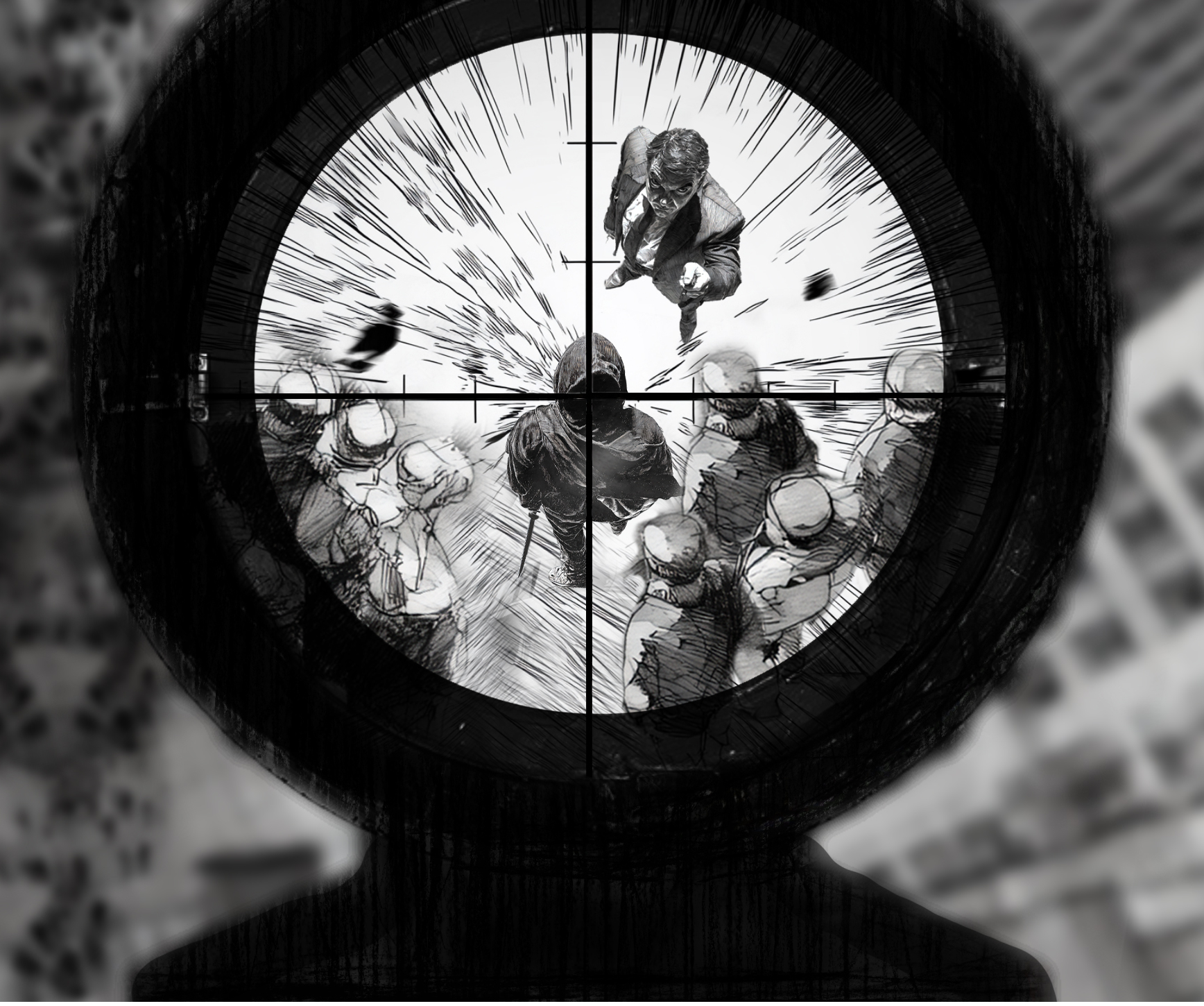
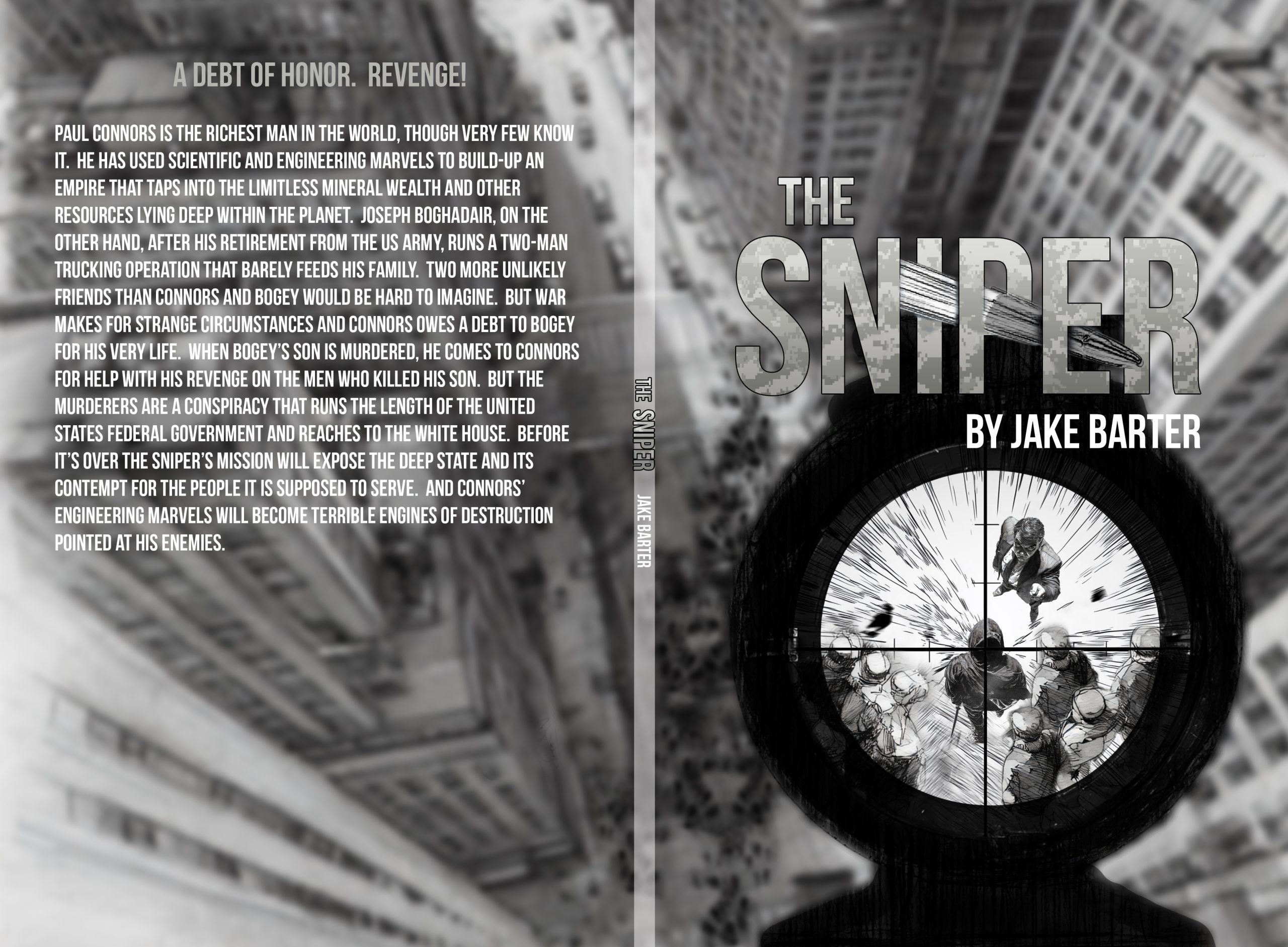
Having made it halfway through the marathon nightmare that is the Dunwich Autumnal Zombie-fest I’m beginning to believe I may survive this horror again. And today was a respite. I was off-duty and lounging around complaining about my fate. But at 2pm I had a teleconference with the marketing professional that provided me with a proposal for launching my book, “The Sniper.”
I had gone through the proposal earlier and put together questions about schedule and ancillary activities (e.g., getting a book cover, coming up with my pen name) and I selected the services that I wanted to include in the contract and also, I wanted to specify the date when most of the activities would start. The meeting went very smoothly and all of my questions were answered and all of my provisos were accepted.
And so now it’s a go.
Sometime before the end of the year there will be a release date and word will go out to all of the non-left-wing science fiction readers that a new classic story has appeared on the literary horizon and everyone who is anyone will be demanding the fastest delivery possible to start reading this splendiferous story as soon as humanly possible. And the critics will fall over each other praising its qualities to the skies. And all the Big Five publishers will be fist-fighting each other at my front door trying to buy the rights to my next novel in the series with ingots of rhodium stacked up in a wheelbarrow behind them. And Joe Rogan will beg me to come on his show and talk about the inspiration I had for the story and about putting him in my next book as a minor character. And then Donald Trump will mention me in his press conference as an example of someone whose mere existence is making America great again.
And of course, I will be incredibly humble and dignified during all this hoopla. After all dignified humility is something, I’m well known for. And I’ve got the whole thing completely covered because my dignity is humble and my humility is quite dignified. So, there’s that.
When I told Camera Girl the cost, I wasn’t sure at first whether she was going to hit me. But she just shook her head and walked away. I told her that a good wife encourages her husband and supports his decisions. She nodded and said, “Sure, support. There you go.” I thought it was weak but as I said she didn’t take a swing at me so a win’s a win.
And honestly, I’m pretty excited about the whole thing. I’m completely aware that the odds are way, way stacked against me. 99.9999% of books don’t sell more than a few copies. It’s one in a million that hits a home run. But I’ve always, since I was a kid, wanted to write a science fiction story. And now, for better or worse, I have and for once in my life I’m gonna do something crazy. I want to do what I can to make sure that as many people as possible read it. I’m putting all the chips on double-zero and spinning the wheel. And round and round it goes.
It is entirely possible that this is the first science fiction movie I ever saw. I seem to remember seeing this on tv as a pretty young kid (maybe seven or eight years old). For that reason, it had a huge effect on my perspective on entertainment. Of course, watching this movie after all these years is a shock from seeing just how ridiculous the whole production is. But at the same time there is a fondness based on the nostalgia it inspires in me, even after all this time.
(Spoiler Alert – Skip down to last paragraph to avoid spoilers and read recommendation)
David MacLean is a young grade school boy whose father is an engineer at a local factory doing top-secret government work. He’s also friends with the local astronomer Dr. Stuart Kelston. David has a small telescope in his bedroom. One night he is awakened about four thirty in the morning by what looks and sounds like a thunder storm but as he watches out his window, he sees a flying saucer land in a sand pit located adjacent to his family’s property.
David runs into his parents’ room and tells them the story. Out of a desire to find out what had scared his son George MacLean goes outside to the sand pit to investigate. And the aliens open up a hole in the sand pit and capture George. When George does not reappear by daylight Mary MacLean calls the police and reports her husband missing. Two patrolmen in a squad car show up and while searching the sand pit area they are also captured by the aliens.
A little later George returns to his house and we immediately see that he is no longer the same man. Whereas previous to his disappearance he was a friendly husband and father, now he is a surly abusive man who backhands his young son for insisting that he saw the space ship land. Also, David discovers that George has a small X shaped wound on the back of his neck near his shirt collar. After a few minutes the two patrolmen appear at the house and they obviously behave just as George is.
And this pattern repeats as through his telescope David sees a little neighborhood girl Kathy Wilson being captured. Later George pushes his wife Mary into the sand pit. And off camera, the town’s Chief of Police also ends up captured too. With all these people now controlled by the saucer-men, their diabolical plan begins to unfold. They are trying to sabotage the nearby factory that is building an atomic powered rocket along with the other plants that are supplying components. Kathy Wilson’s father; Dr. William Wilson is a physicist who is designing the atomic rocket (although how a physicist becomes a design engineer is beyond me). So, she attempts to kill her family by burning down their house. George works in the factory creating the rocket engine so he and his wife attempt to assassinate Dr. Wilson with a high-powered rifle. And the two police officers successfully burn down the engine plant.
At first no one believes David when tells his story and the Police Chief has him imprisoned in a jail cell awaiting his parents’ appearance and probably his subsequent death. But the desk sergeant is disturbed by his obvious fear and calls a medical doctor to look at him. Dr. Patricia Blake listens sympathetically to David’s crazy story and when she finds out that they both know the astronomer Stuart Kelson, she calls him up and is told that David is a very honest and serious child. And when his parents arrive to get David, she notices that they really are behaving abnormally and so she makes up a story about David having symptoms of polio to prevent them from dragging him away.
Now Dr. Blake takes him to Stuart Kelston and we get a crash course on the latest theories on Martian biology. And somehow Kelston intuits that Martians have gotten wind of the atomic rocket project and they are here in their flying saucer to sabotage the project. And Kelston trains his enormous observatory telescope on the sand pit across town just as George MacLean pushes General Mayberry, who is in charge of security for the whole rocket project, into the sand pit.
Kelston springs into action. He calls the Pentagon and a Col. Fielding orders a mechanized brigade of tanks and other weaponry to descend on this little town. Orders are given to arrest the MacLeans, the Police Chief, the two patrolmen and General Mayberry. Only David’s parents are captured alive and are sent to a hospital to attempt to remove the control devices in the back of their necks. The army surrounds the sand pit and eventually finds the saucer and use explosives to open up a tunnel leading to the ship. Fielding and his men descend down and attack the “mu-tants” that serve the super-intelligent Martian. The servants are about seven feet tall covered with green skin and have bug-eyes. They shamble around so slowly it’s amazing they get anything actually done. The master is this little homunculus in what looks like a glass bell jar that the mu-tants carry around. He’s got a humanoid face on top of a body that’s an immobile lump with a few tentacles sticking out here and there. He seems to have been spray-painted with bronze colored paint. He controls his servants by telepathy which we observe as him furrowing his brow. At some point, David and Dr Blake are captured when a hole randomly opens in the ground below their feet. And they have to be rescued by the army and Dr. Kelston (he seems to be in love with Patricia Blake).
The last scenes are of the whole human team running away from the sand pit as the space ship begins to depart with a bomb that the army planted in it about to explode. In the last scene David wakes up and runs into his parents’ room to discover that the whole thing was a nightmare. He goes back to his room and falls asleep. But at four-thirty he’s awakened by noise and sees exactly the same sight of the saucer landing in the sand pit. The End.
My thoughts on this movie. Where to begin? Okay, so the whole movie drips with 1950’s cold-war paranoia. Every character portrayal is over the top and the dialog is pretty hokey. The astronomer’s explanation why the Martians are aware of this atomic rocket project makes no sense at all. And the idea that a local astronomer can summon an army by calling the Pentagon is pretty hilarious. As for the aliens, the costumes and the scenery in the tunnels are laughably bad and the space ship looks like a 1950’s set designer’s idea of a 2000’s manufacturing space. The special effects, mainly, an infra-red “ray gun” is pathetic. On the other hand, the personality of the boy; David is sympathetic and Dr. Blake comes off as a compassionate woman which is always attractive. And the whole action of the army in their “war” against the aliens is ridiculous. The colonel leads his troops into the tunnels and he’s firing machine guns at mutants instead of his gunners doing that. But it’s a great bit of nostalgia. The terrible special effects and the vintage military clips from WWII training footage is wonderful. And all the B-movie and television actors like Leif Erickson, Hillary Brooke (The Abbot and Costello Show), Barbara Billingsley (Leave it to Beaver), Robert Shayne (Inspector Henderson on the Superman Show) and Richard Deacon (Mel Cooley on the Dick Van Dyke Show) are so familiar and comforting. I highly recommend this movie for anyone who loves schlocky old sci-fi.